
Artificial intelligence (AI) use has become a major point of contention in higher education, frequently regarded with skepticism and, in some cases, banned in the classroom. But while AI’s application in a university setting can be polarizing for educators, what do the students themselves think? Debates over intellectual property, authenticity, and human creativity at VCUarts Qatar Week 2025 highlighted how today’s design students feel about using artificial intelligence.
The Department of Interior Design at Virginia Commonwealth University School of the Arts set out to examine through a Common Project in Spring 2024 – work that was later showcased during VCUarts Qatar Week 2025, the annual event that brings the Doha campus to Richmond to share research and creative work with the home campus.


“We had three main questions to explore,” explained Roberto Ventura, Chair of the Department of Interior Design at VCUarts’ Richmond campus and one of the project researchers. “First, how our students were engaging with AI; second, how we might set some guiding principles for its use in the classroom; and third, how we could better understand its potential in order to use it as a complementary tool in design education.”
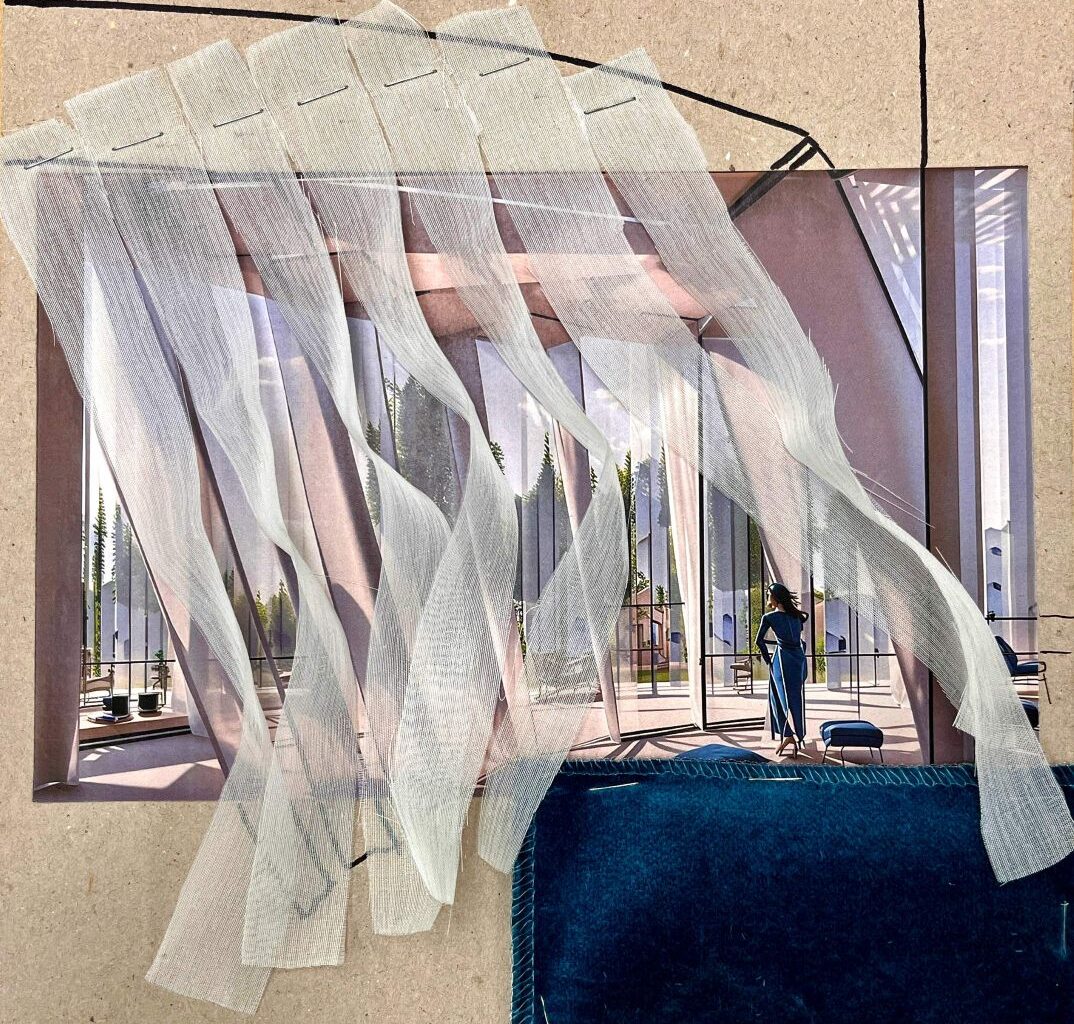
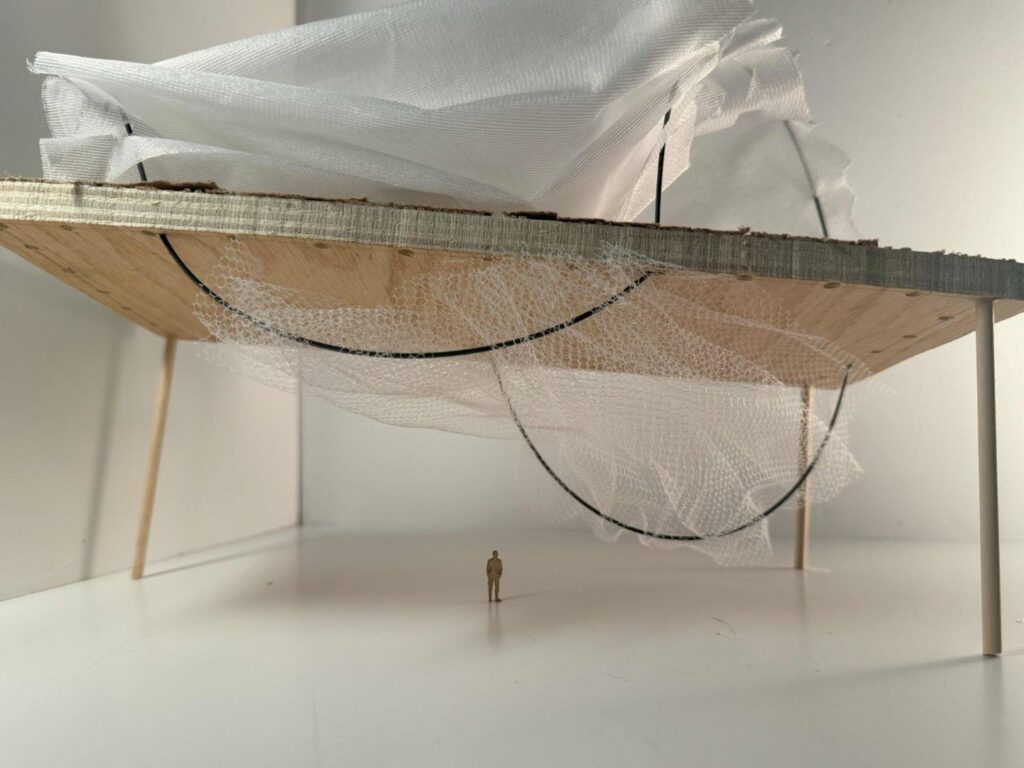
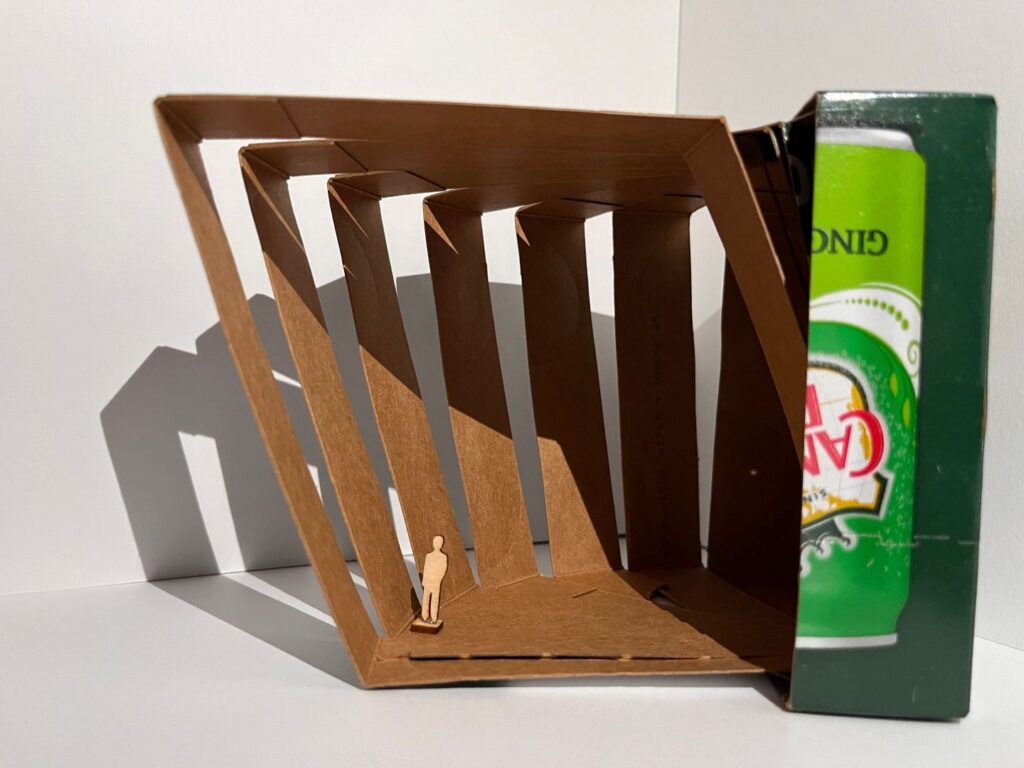
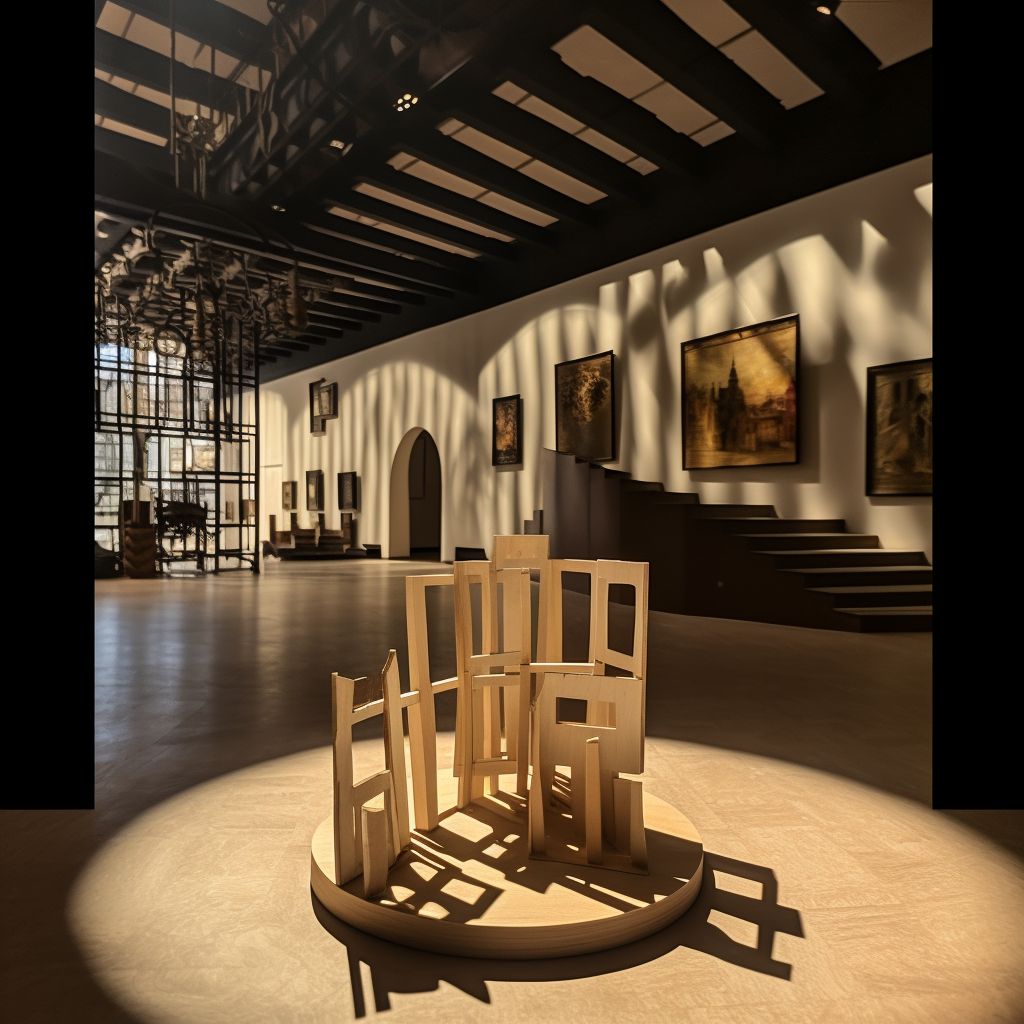
The Common Project brought together more than 120 students across undergraduate and graduate studios. Their assignment was to build small-scale models from found materials, photograph them, and then use AI tools, like Midjourney and Vizcom, to generate variations. They later transformed these outputs into three-dimensional collages that mixed analog and digital media.
Students were surveyed three times – before the project, immediately after, and again eight months later – to capture changing attitudes toward AI.
The results showed that while students generally accepted AI in principle, their actual use of it decreased over time.
“I was surprised at how hesitant the students were to engage with it,” said Ventura. “Everywhere you look in higher education reporting, the narrative is that students are using AI for everything. But our surveys told us something different. Students are really worried about intellectual property, about their futures in the job market, even about whether they were contributing to their own obsolescence.”

In their own words and reported in the findings, students felt that AI use in general makes people “lazy”. In design specifically, one student cited feeling “threatened because anyone can create a space now using AI without going through education and years of experience” and call themselves an interior designer. They worried that engaging with AI would be akin to training the very technology that would replace them.
In terms of the actual work generated, Kristen Carleton, Assistant Professor and the Graduate Program Director of Interior Design at VCUarts, and co-researcher of the CP noted that the results showcased “vibrant explorations”.
“The strongest collages were the ones where students had clear intent, where they used AI to push a design narrative forward and not as a decorative tool,” Carleton noted. “Those successful works treated AI as a dialogue partner.”
Faculty reported expecting enthusiasm among students after being given permission to continue exploring the use of AI after the Common Project concluded. But many still expressed hesitation over continued use.
“Students continued to ask if it’s okay to use AI; they often said it felt like cheating,” she said. “That sense of guilt was striking, especially when the work itself showed real creativity and risk-taking.”


So what does the future hold for AI in design education?
Co-researcher and Assistant Professor in the School of the Arts at Virginia Commonwealth University, Tim Hamnett, hopes that students will be open to working with AI as a supportive tool, similar to how professionals have adopted it.
“Some architects us it to generate details, not to dictate the whole design,” he explained. “That might be a more realistic way forward – using AI for something precise, rather than letting it take over the big gestures.”
Students and faculty from both campuses walked away from the presentation questioning their own assumptions about AI in design, sparking conversations that have continued beyond VCUarts Qatar Week 2025.
“We make so many assumptions about students and AI. This project reminded us to pause and really understand their perspectives, not just follow the narrative that education is broken,” Ventura reflected. “Our programs are very process oriented, and it’s important to show how AI can be a part of process – another tool in a student’s toolkit – not just a shortcut to outcomes.”
That reflection echoed across the team. As Carleton put it: Whether we like it or not, AI is here to stay, and our students from Richmond, Virginia to Doha, Qatar need to be prepared to form their own opinions on how best to use it.”
This series is part of an editorial partnership brought to you by VCUarts Qatar and Khaleejesque.