“Greater than the tread of mighty armies is an idea whose time has come.”
I came across this line, attributed to Victor Hugo, while reading John Kingdon’s Agendas, Alternatives, and Public Policies during my second semester at the Harvard Graduate School of Education. I keep returning to it, not because I think Qahwa Talks is going to change the world overnight, but because it captures something I’ve come to believe: sometimes an idea sits with you for months before you realize you can actually do something with it.
For me, that idea was a lecture series in cafés.
I can trace it back to my year in Cambridge, Massachusetts. I don’t think I can overstate what living there did to me. Between Harvard, MIT, and the dozens of universities scattered across Boston, ideas seemed to be the city's unofficial currency. But what struck me most wasn't what happened inside lecture halls. It was what happened outside them.
I found myself drawn to cafés that doubled as community spaces. There was Minara, rooted in the majlis tradition, where conversations, art, and cultural performances brought people together. Then there was Luxor, the only Arab café in my neighborhood, where I could sit doing homework beside students preparing for exams or friends meeting for coffee after iftar. Nobody needed a student ID to be there. Nobody had to justify spending an evening thinking about something.
I began to miss a particular feeling: learning as something you chose to do in public, on a weekday evening, simply because you were curious.
Doha has no shortage of intellectual capital. We have world-class universities, researchers, academics, and people working on questions that matter far beyond Qatar. I knew this firsthand, having spent six years working across the country's education sector. Yet I found myself wondering: where could someone who wasn't enrolled in a university course go to hear a professor speak about an interesting idea, ask a question, and meet people who wanted to do the same?
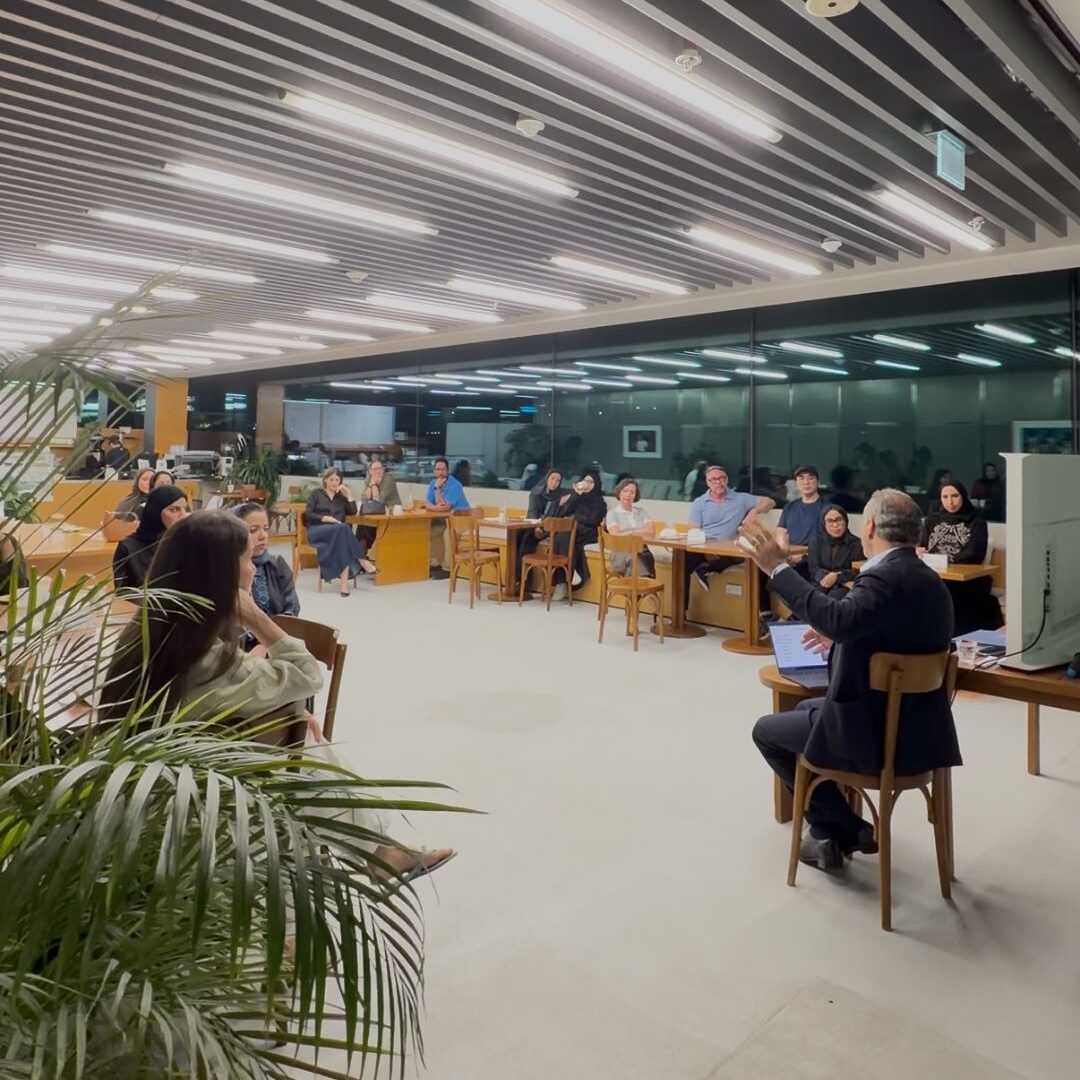
I wanted to bring the kind of intellectual energy I'd experienced in Cambridge back home, but in a way that felt natural to Doha. Not another conference or networking event. Something smaller, more informal, and built around the simple pleasure of learning together.
I started telling people about the idea. The response was mixed. Some were enthusiastic; others were skeptical. Doha wasn't Cambridge, they reminded me. Would people really give up a weekday evening to listen to a professor speak in a café?
I didn't have a convincing answer. I just couldn't shake the idea.
The first week I returned to Doha after graduating, I emailed professors from my undergraduate years at Georgetown University in Qatar, including those whose classes had stayed with me long after the semester ended. Then I reached out to cafés I liked, asking whether one would be willing to host a pilot session.
Two professors replied within minutes. A café said yes within a day.
Suddenly, something that had existed only in my head had a venue, speakers, and a date.
That was how Qahwa Talks began: with a few emails, a willingness to ask, and the realization that I didn't need to build an institution to create a space for learning. I needed people willing to show up.
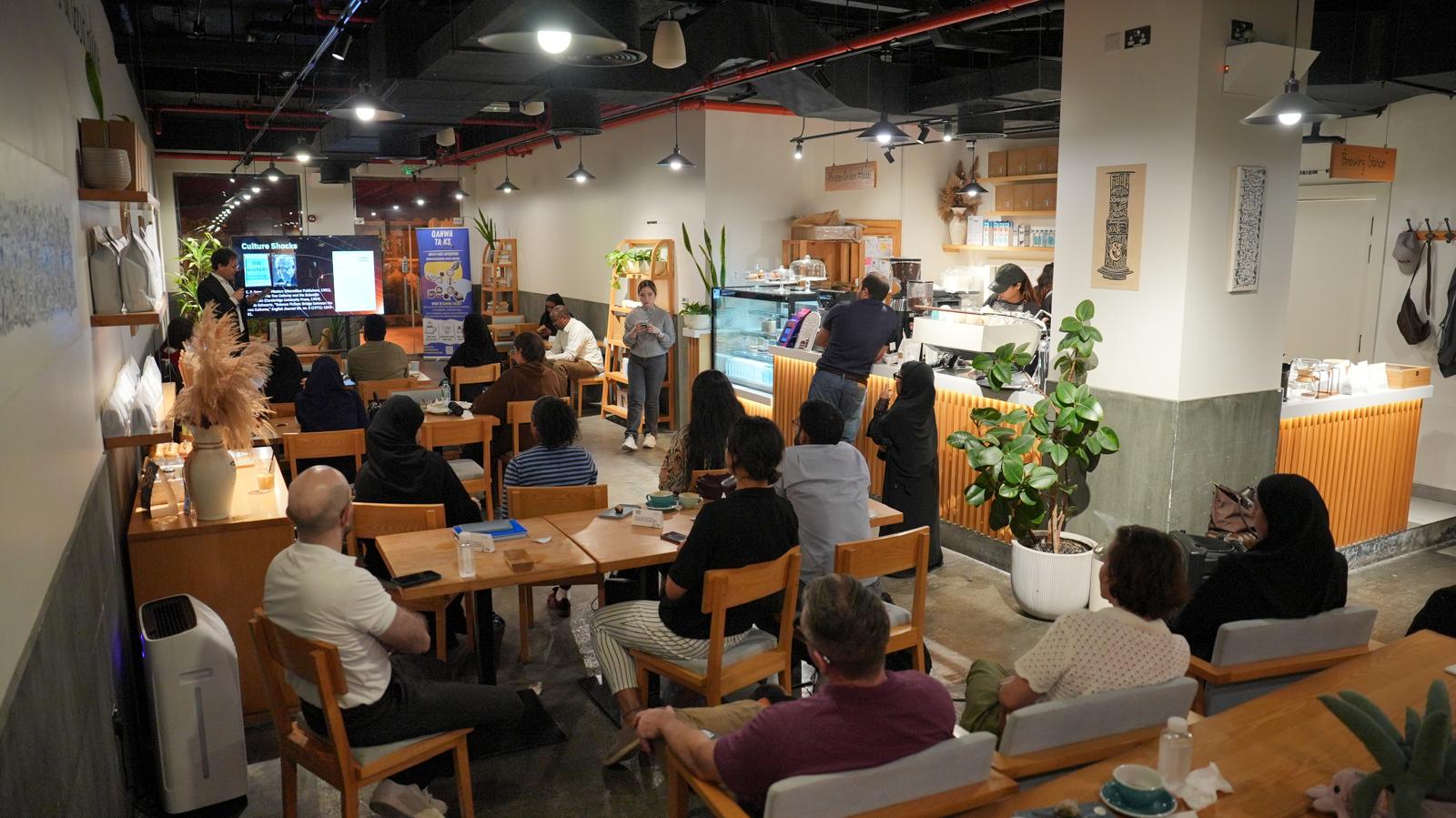
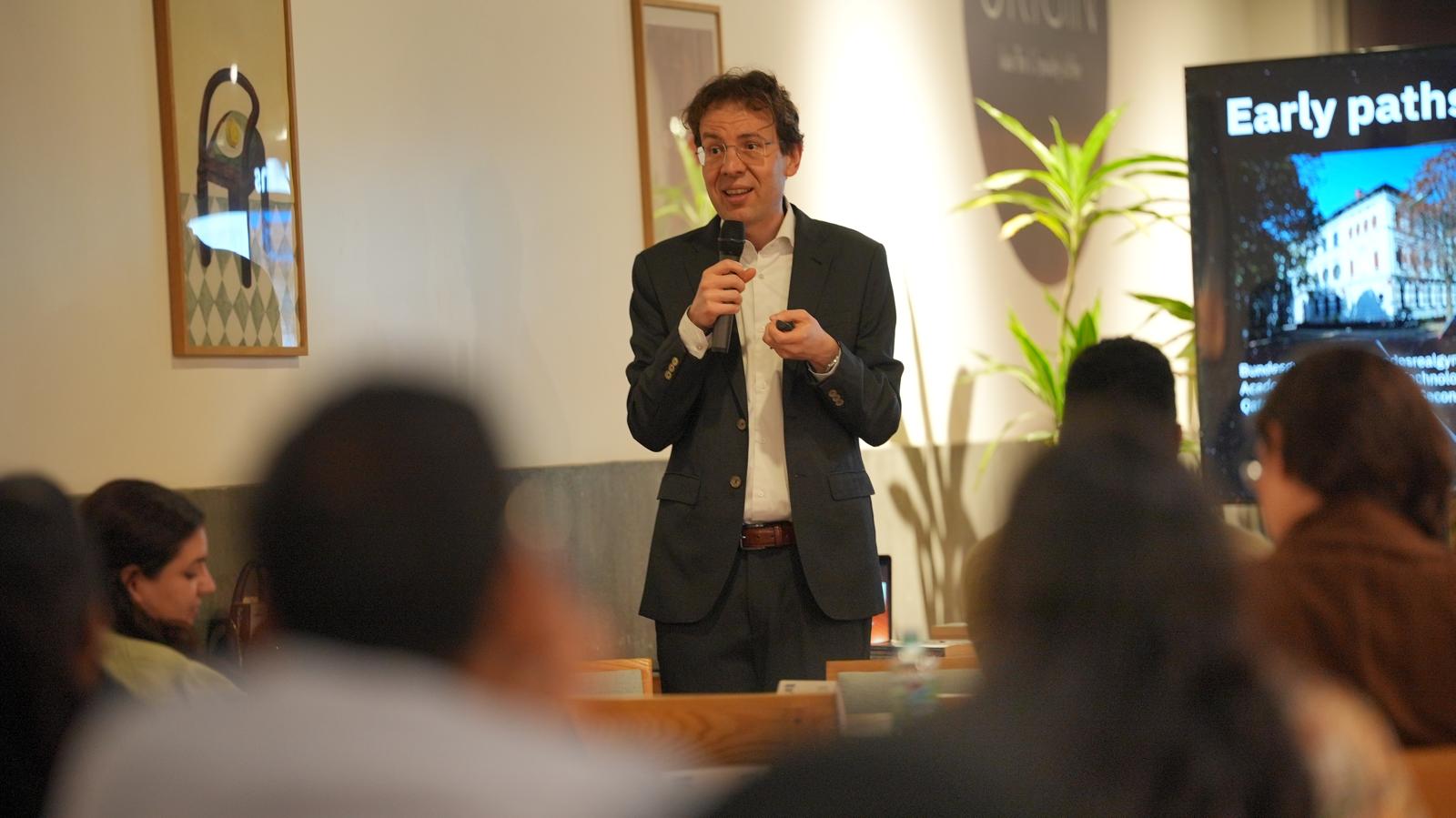
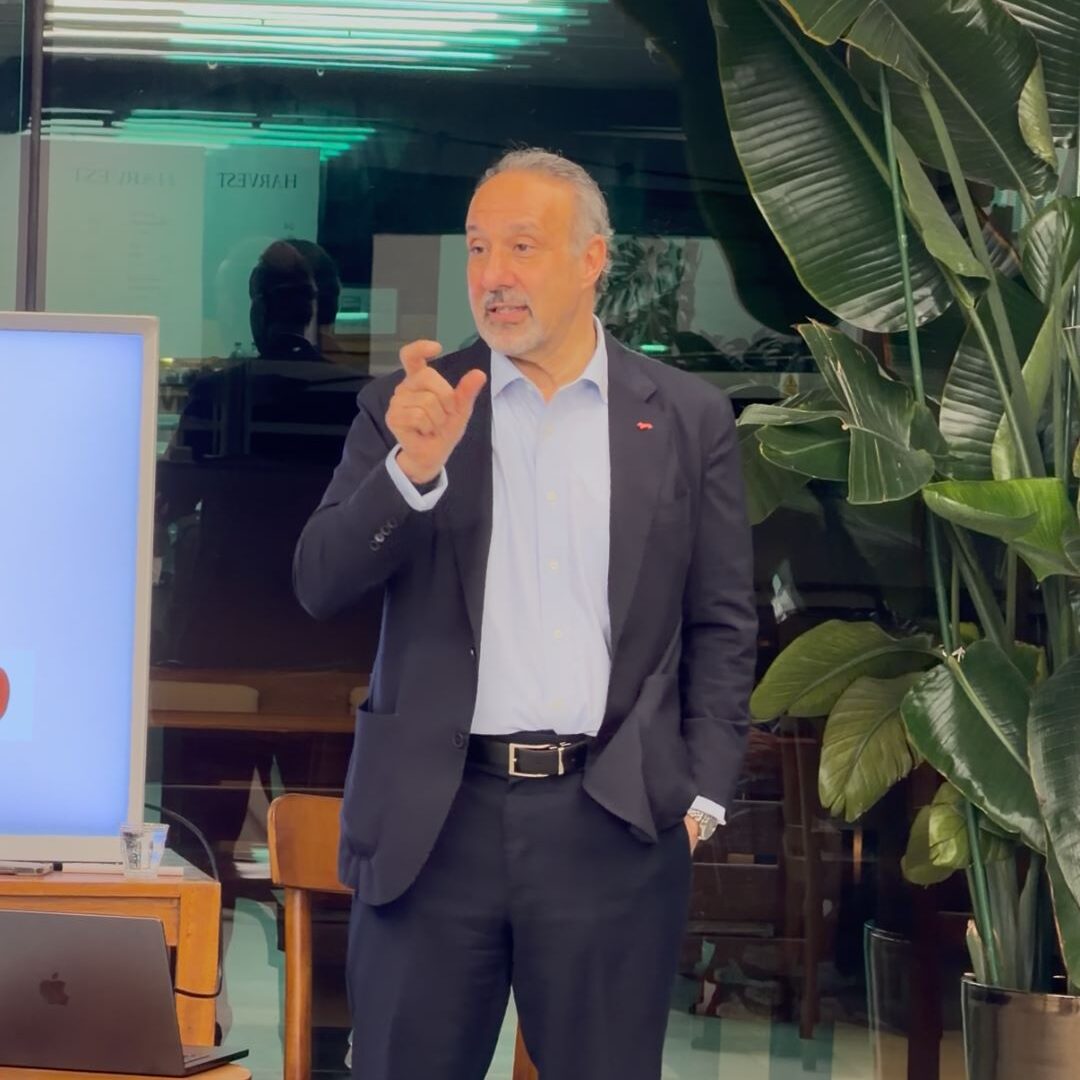
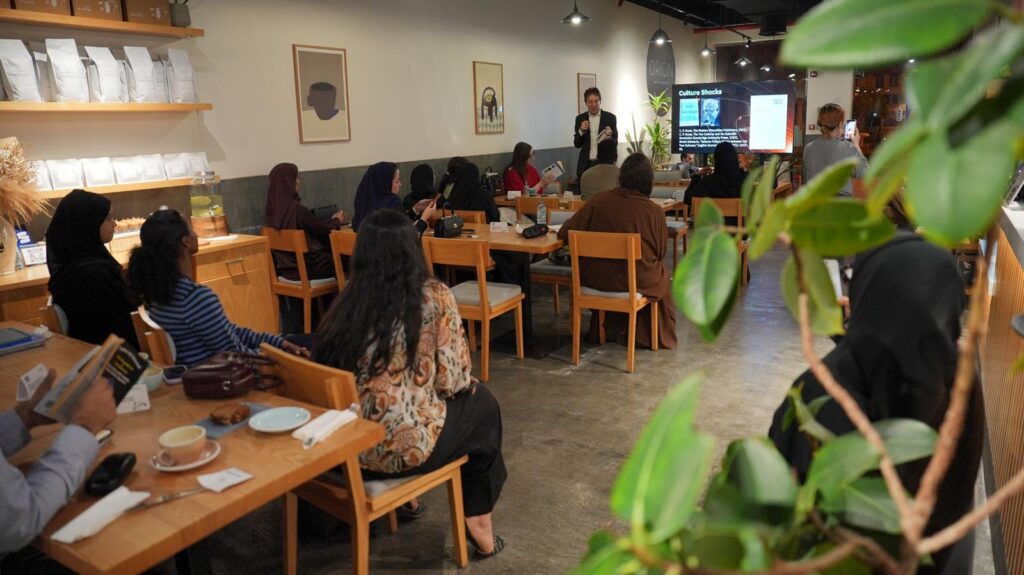
Our first sessions brought Georgetown and Virginia Commonwealth University professors into cafés for conversations about international politics and, later, the unexpected connections between science fiction, science, and the humanities. We gathered around coffee, listened to ideas we might not encounter in our daily lives, and made room for questions that didn't have to fit neatly into a syllabus.
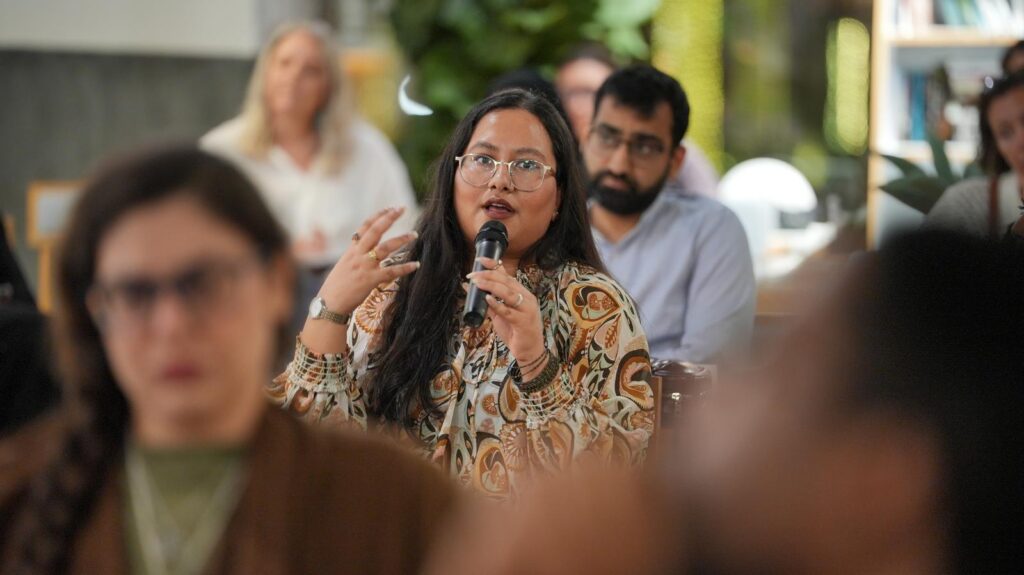
What I love most is what happens after the talk. People stay to debate an argument, exchange recommendations, or continue a conversation with someone they met an hour earlier. The learning doesn't end when the speaker finishes. Sometimes, that's when it really begins.
I've come to think of Qahwa Talks as an attempt to make education less transactional. So much of our formal learning is tied to a qualification, a deadline, or a professional outcome. Those things matter, but curiosity deserves space, too. We should be able to learn about international politics, the human brain, or the philosophy behind a science fiction story without needing a degree or a career-related reason to do so.
And there is something fitting about doing this in the Gulf. Our cafés and majlis gatherings have long provided spaces for conversation and the exchange of ideas. Qahwa Talks takes that familiar instinct to gather over a cup of coffee and gives it a new purpose: bringing academic knowledge into the places where people already spend their time.
I don't think cafés will replace universities, nor should they. But I do think education can happen in more places than we've traditionally allowed it to. If we want to build a culture of lifelong learning, we need to create opportunities for people to encounter ideas outside formal institutions, without the pressure of grades, credentials, or getting everything right.
Qahwa Talks is still young, and I'm learning as I build it. But its existence has already reminded me that innovation doesn't always require inventing something entirely new. Sometimes it means looking at familiar spaces differently, connecting people who should be in the same room, and making something that once felt out of reach feel accessible.
The most interesting classroom in Doha might not have a whiteboard, a timetable, or even a classroom door. It might have a coffee machine, a few tables pushed together, and thirty people who came in as strangers and left with something new to think about.
For now, that's the kind of classroom I'm interested in building.
About the Author:
Sara Elamin is an educator, communications strategist, and community builder passionate about reimagining how and where learning happens. A Georgetown University in Qatar alumna with a Master's in Education (M.Ed.) from Harvard University, she has worked across K–12, higher education, and educational entrepreneurship in Qatar. She is the founder of Qahwa Talks, a community-driven initiative that brings academics and curious minds together in cafés across Doha for conversations that make intellectual exploration a shared social experience.
For more informations visit: @qahwatalks.qa