What happens when a single, unexpected caramel sweet unlocks a floodgate of childhood memories and cultural nostalgia? The answer is "YA 3ASAL" ("Oh, Honey"), a vibrant and deeply personal exhibition by artist Sarah Elawad that explores the universal connection between food, memory, and hospitality. This interview offers a look behind the scenes, featuring a conversation with the artist and the curators who brought her vision to life at The Gallery at VCUarts Qatar, Chase Westfall and Dina Alkhateeb.
The exhibition itself is a playful and deeply nostalgic exploration of how the simple, universal act of sharing sweets and hospitality ties into personal memories, cultural heritage, and sense of belonging. The initial spark for the idea came from that moment during an Eid Prayer in Washington Square Park, which blossomed into a sensory experience that transforms everyday treats into striking pieces of pop-art.
In this interview, the artist and curators discuss the creative spark that ignited the concept, how Sarah Elawad translated her background as a graphic designer into the exhibition's "collage-like, kitsch" aesthetic, and how the curatorial vision of Chase Westfall and Dina Alkhateeb brought this sugar-rush fantasy world to life.

Khaleejesque Magazine (K.M): Could you elaborate on the experience at Eid Prayer in Washington Square Park that sparked the idea for this exhibition?
Sarah Elawad (S.E.): A little girl was handing out candy, as is quite common after Eid Prayer anywhere, and only after she had handed me one did I look down and realize it was the caramel round sweet from a box of Quality Street. I hadn’t had or seen a Quality Street sweet in years and as soon as I bit into it I felt a rush of memories of my family home growing up and all the things associated with the preparation to welcome guests: A freshly cleaned home, the smell of bakhoor, all the sweet treats I knew would be available later. In a moment where I felt far from my family, this little piece of candy brought back memories of celebration and fun times together and gave me a sense of comfort.
I started to think more about memories and food and the connection they have to bringing us joy especially through sweet things as well as our traditions of sharing or gifting sweet things, and in turn, YA 3ASAL, was born.
(K.M): Your artist statement mentions that certain tastes and smells can trigger past memories. What specific sweets bring you back to your childhood, and how did those memories influence the artwork in "YA 3ASAL"?
(S.E.): I grew up in the UK for the most part, but it is so multicultural that I was exposed to treats from all over the world. My family would also travel to Sudan every year. My parents were quite strict about things we could eat growing up, especially when it came to sugar. But as is usually the case a lot of those rules were more lax when we’re traveling back home. One of my first encounters with a fizzy drink was in Sudan when I tried the only Sudanese made soft-drink: Pasigianos. The fizziness and sweetness was so strong for me, as someone who hadn’t really had anything like it before, I couldn’t really tell what it tasted of but it felt like it went straight to my head. For the first time in 104 years production for Pasigianos has been halted in Sudan due to the ongoing war and so it felt important for me to highlight it in my art work for this show.
I’ve also highlighted sweets I loved growing up, like Hubba Bubba, and sweets I remember consuming a lot when I lived in Qatar for my undergraduate studies, like the cake rusk biscuits. I’ve moved around a lot in my life so I tried to reference sweet things from different areas I have been and lived in because they all evoke different memories. Specifically in Qatar, my memories of sweets are from stopping at the dukan on my way home from school with my siblings and buying some sour candies in the heat.

(K.M): As a graphic designer, you explore sweets not just as cultural markers but as "enticing graphic and visual forms". Can you discuss how you translated the physical form of these treats into the visual language of the exhibition?
(S.E.): It was important for me to not simply replicate the packaging in my art work. I wanted to express the feeling of joy and warmth I felt when I ate some of these sweets or saw the bright colors on their packaging whilst also paying tribute to the visual language on some of them. I did this by breaking down the designs and then using elements from them manipulated slightly in my final pieces.
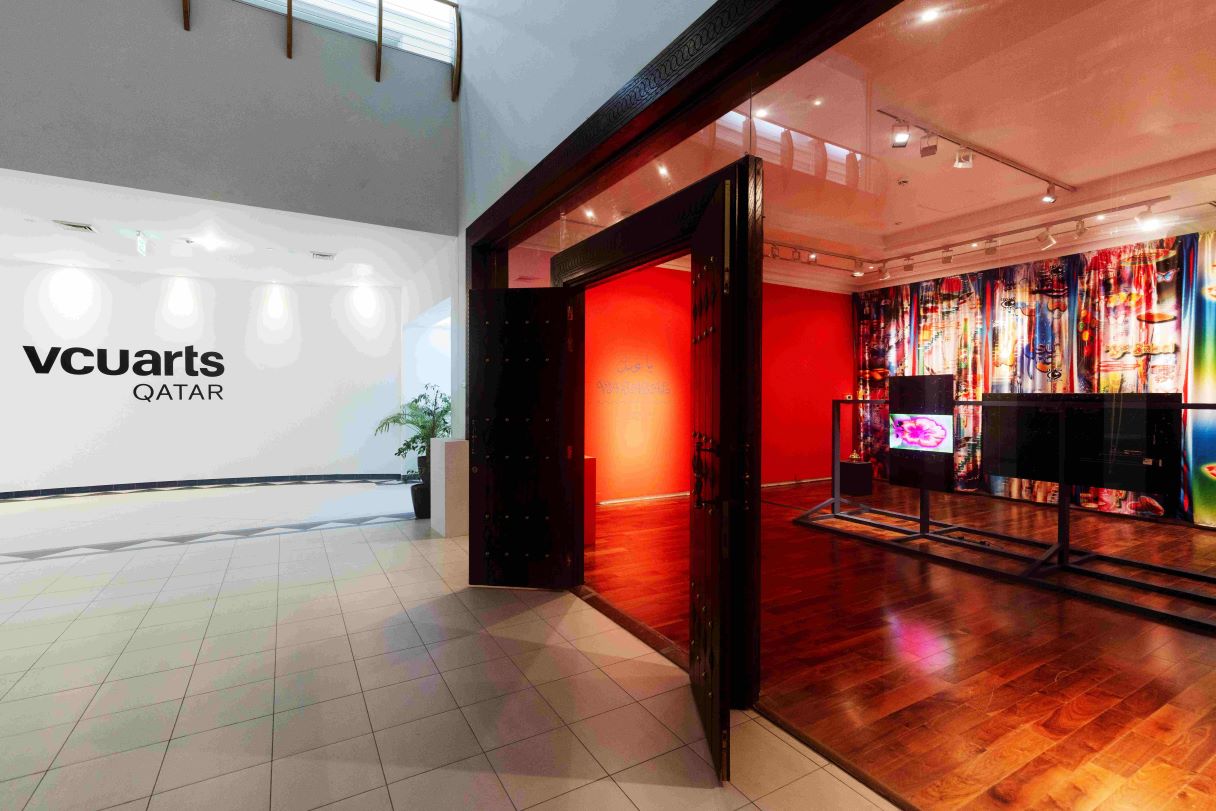
(K.M): The exhibition incorporates shimmery patterned fabrics, bright walls, and dramatic lighting to create a "sensory experience". What was your process for designing the space to evoke the feeling of domestic parlors and living rooms?
(S.E.): The materials were influenced a lot by the traditional make up of a living room. I remember these huge curtains we had in my house growing up with frills and a couch with flowers printed all over them, very 90s. But the colors are not so accurate, I use a lot of color in my work because I love it and I feel like it evokes joy and playfulness. I didn’t really want people to walk in and feel like they had just stepped into their own living room, I wanted them to walk in and feel like they stepped into a fantasy version of that, a playful, joyful space that felt a bit like a sugar rush.
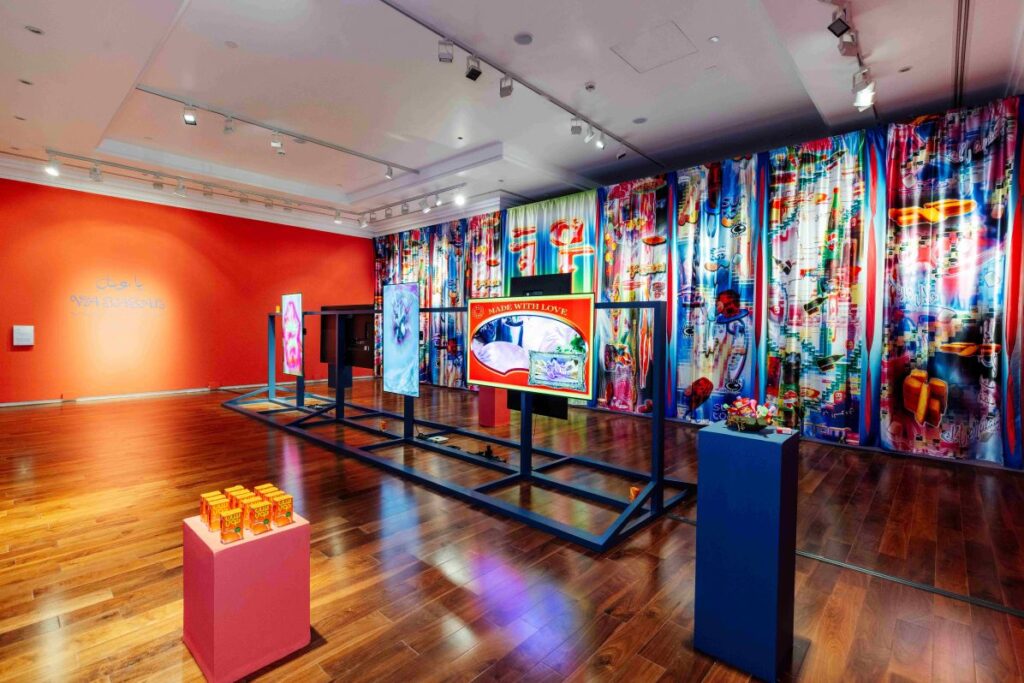
(K.M): Your work is described as "collage-like, kitsch, and experimental". How did you apply this artistic approach to the theme of hospitality and sweets in "YA 3ASAL"?
(S.E.): I love to explore collage with contradiction, there's so much space for experimentation. A marshmallow is not usually that big, but it can be in a collage. You can stretch, put two things next to each other that you may not ordinarily put together. It’s so replicant of the experimental nature we have as children too. I struggle to eat two different sweet things in a row now without feeling a little unwell, but as a child I would probably eat as many different sweet things in a row and see how far I could go. I basically have that same approach when I design now.
(K.M): What made you decide to curate Sarah Elawad's work for an exhibition, and what about her artistic vision for "YA 3ASAL" stood out to you?
(Chase Westfall & Dina Alkhateeb): The decision to curate Sarah Elawad’s work came from how YA 3ASAL reflects a thoughtful and creative approach to cultural memory and connection. As a VCUarts Qatar alumna, Sarah brings a deep understanding of the region’s traditions and reimagines them in a way that feels both personal and inclusive. Her ability to turn a simple act of hospitality into an engaging, sensory experience shows depth in her artistic vision and aligns with The Gallery’s mission to support meaningful and locally rooted creative work.
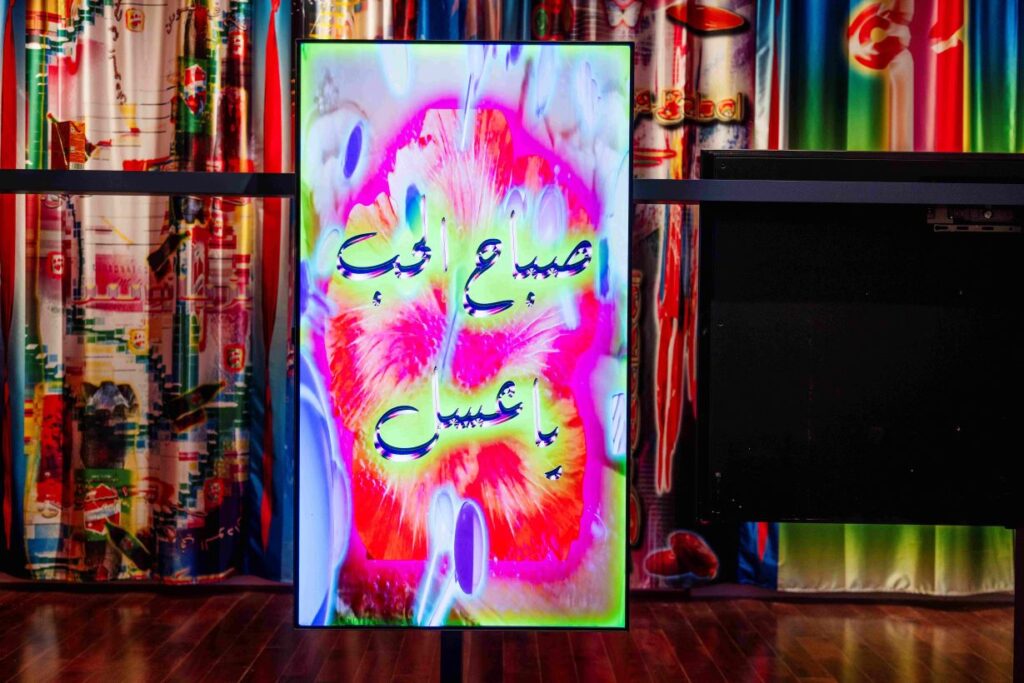
(K.M): How does this exhibition fit into the Gallery at VCUarts Qatar's mission or overall programming?
Dina Alkhateeb (D.A): YA 3ASAL reflects The Gallery’s commitment to supporting innovative, experimental work that draws from personal and cultural narratives rooted in our region. Sarah Elawad, a designer deeply connected to this place, transforms familiar rituals of hospitality into a playful yet meaningful sensory experience, one that celebrates everyday memory, and shared moments. By highlighting voices from our own community and encouraging bold storytelling, the exhibition invites viewers to explore themes of identity and belonging in ways that are both deeply personal and widely relatable. It is exactly the kind of thoughtful, boundary-pushing work The Gallery exists to showcase.
(K.M): Given the exhibition's themes of connection and community, how did you, as curators, work to bring Sarah's vision to life to create a space that feels welcoming and communal for visitors?
(D.A): Collaborating with Sarah, we focused on creating a space that captures the vibrant energy and joyful spirit of the exhibition. Instead of a neutral gallery setup, we embraced bold colors, playful textures, and an immersive layout that encourages curiosity and interaction. Every element was designed to reflect the celebratory nature of Sarah’s work and to welcome visitors into a space that feels lively, generous, and shared. It was important to us that the exhibition not only be seen, but felt as a moment of collective joy and cultural connection.
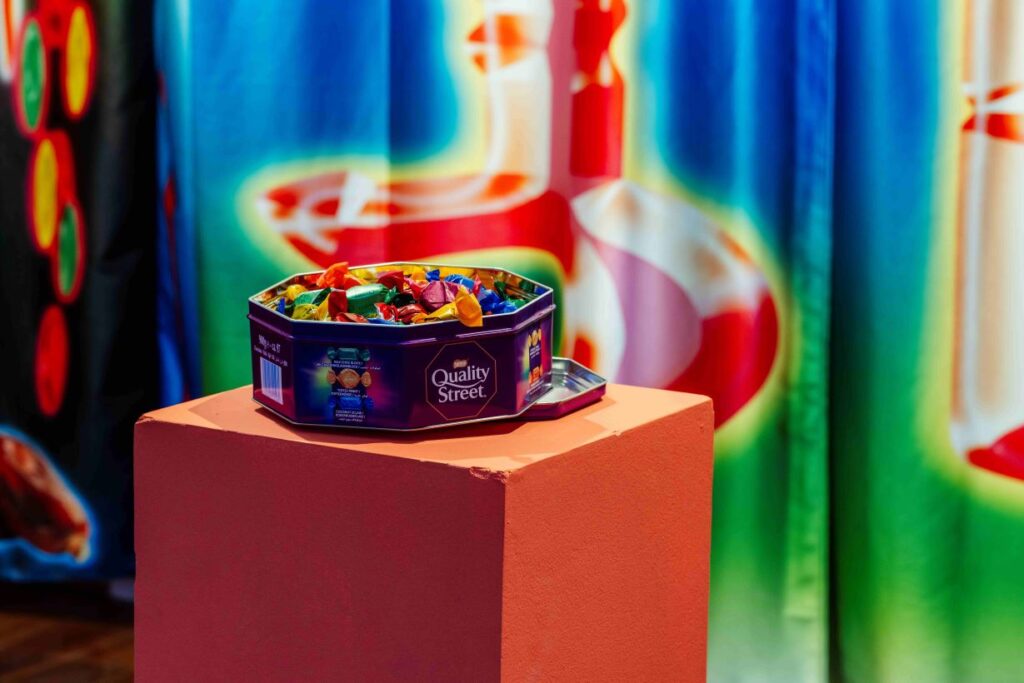
(K.M): The exhibition asks visitors to reflect on their own memories and relationships with sweets. What kind of audience interaction or response are you hoping to see?
(D.A): We hope the exhibition sparks a sense of personal nostalgia, where visitors find themselves smiling at a sweet they recognize or remembering a moment tied to family, celebration, or home. It is less about a formal interaction and more about the emotional connections people make as they move through the space. Whether it is sharing stories with a friend, taking a photo, or simply pausing to feel something familiar. We are hoping the show invites people to reflect, connect, and enjoy the small delight of tasting the sweets that inspired the work.
YA 3ASAL exhibition was on display at The Gallery at VCUarts Qatar from August 28 to October 9, 2025. For more information, visit: https://qatar.vcu.edu/event/ya-3asal/