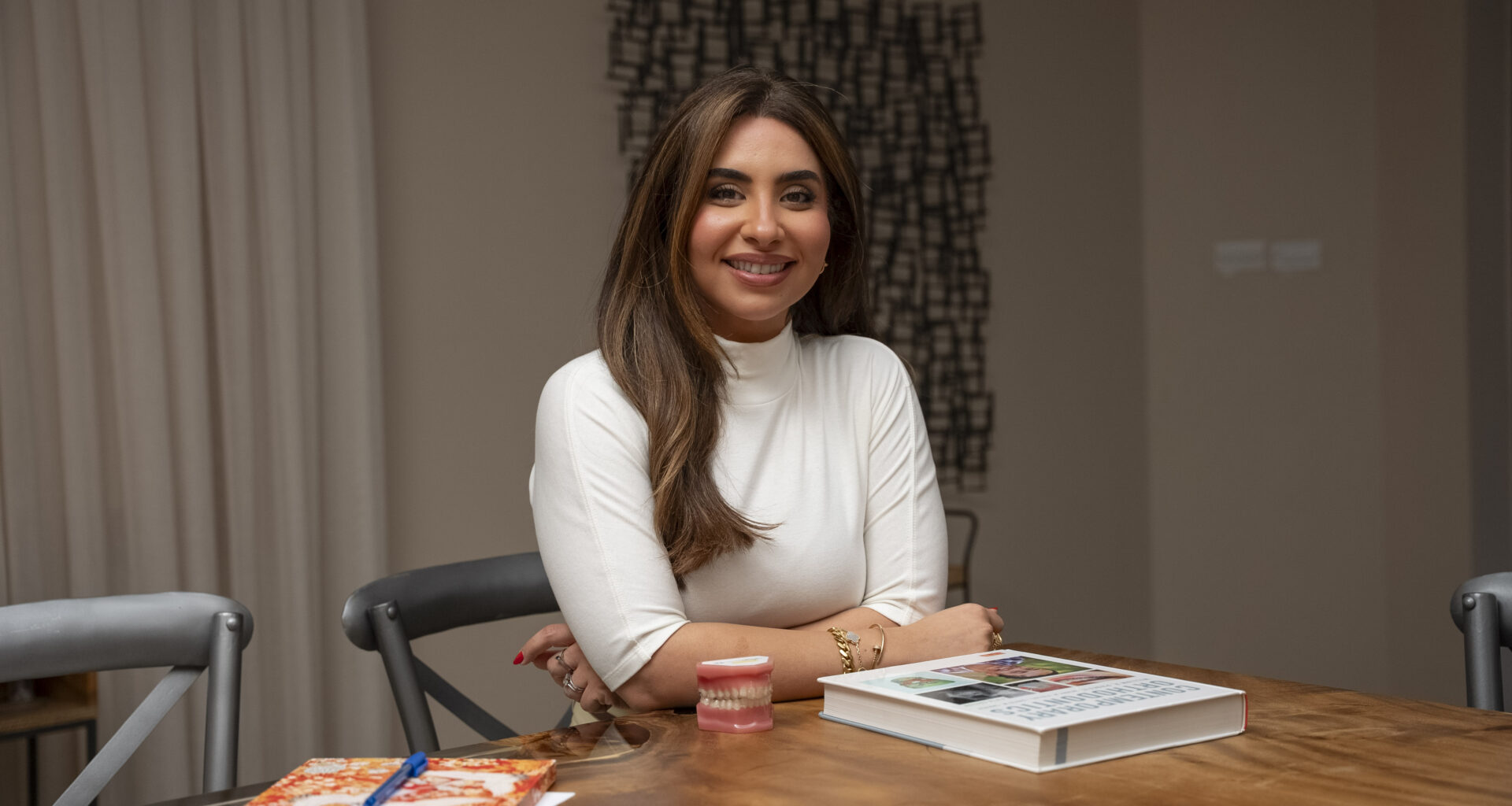
Dentistry and design are rarely spoken of in the same breath. One is a field of meticulous science, measured angles, and textbook outcomes; the other, a world of abstract concepts, subjective beauty, and creative expression. Yet, in a bold move that has redefined aesthetic orthodontics, Dr. Sarah Merza, a Kuwaiti orthodontist specialized in Invisalign, has masterfully merged the two, creating a distinct philosophy known as Merza Method.
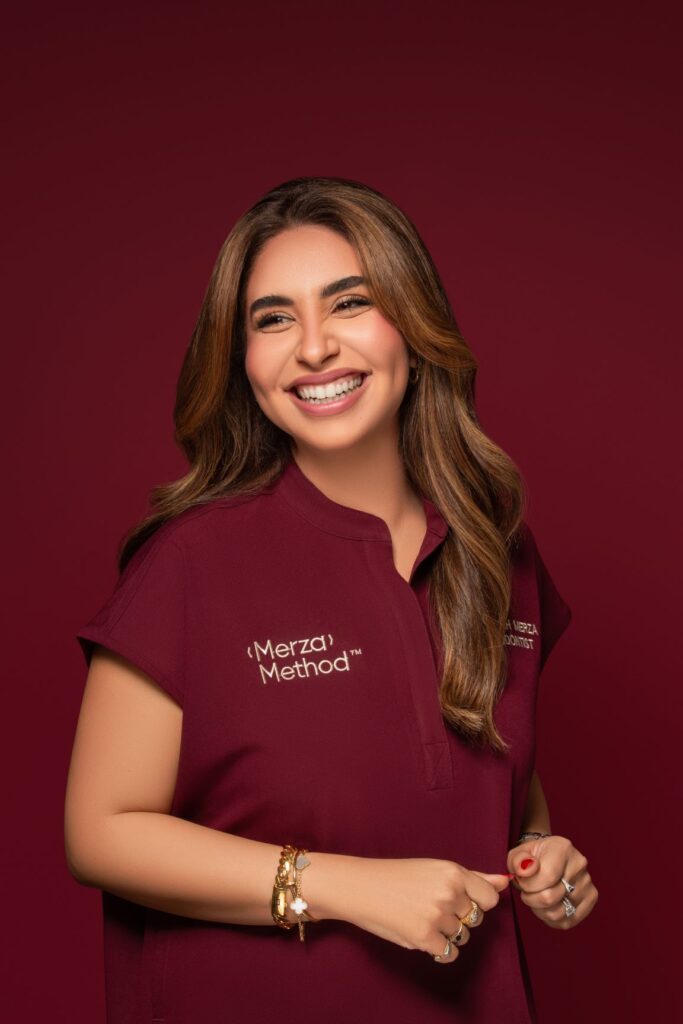
The core of her approach is a radical departure from the often-touted "golden standards" of the perfect smile. Instead, Merza Method champions natural imperfections and personalized beauty, creating smiles that are unique to the individual, not forced into a universal mold.
But what drives a highly qualified medical professional, one trained in the structure of science, to break the mold and forge an entirely new brand? The answer lies in the dynamic intersection of clinical expertise and an evolving patient desire for authenticity.
Dr. Merza noticed a gap: her scientifically perfect, textbook-standard cases sometimes left patients feeling "let down." She recalls patients saying, "This isn't exactly what I was hoping for." They were straight, but lacked a personalized aesthetic that truly resonated.
The ultimate wake-up call was seeing patients who had been treated by her then seeking the uniform, often artificial look of "Hollywood smiles" through veneers. Dr. Merza realized the problem wasn't her clinical skill, but the rigid, one-size-fits-all aesthetic standard she was adhering to.
"I thought to myself, why don't I step outside of the box," she recalls. "…Maybe if I don't follow the exact methods that we were taught and I create my own thing, my own angles, my own sort of beauty concepts that I feel would look better on this person, i.e. more personalized." This moment of creative reckoning is the powerful turning point that birthed the Merza Method.

To translate this emerging philosophy into a viable, impactful brand, Dr. Merza collaborated with two key creative entities: Lulwa Al-Ajeel, a brand consultant and co-founder of The Stairway Collective, and Abdullah Abdal, founder and creative lead at JAM Guys.
Al-Ajeel’s team was tasked with finding the "white space" in a saturated market, noting, "it felt that the majority of the doctors are fighting for the same service and we wanted to find that white space for Dr. Sarah to operate in."
Abdal and the JAM Guys team were responsible for translating abstract concepts into a tangible, premium visual identity, bridging the rigor of science with a warm, human touch. Their combined creative efforts were crucial in moving Merza Method from a personal approach to a professional institution.
For creative professionals, the narrative of Merza Method is profoundly relatable. It’s a story about innovation driven by the inadequacy of existing standards and the need for differentiation. Dr. Merza firmly believes "There is no innovation without creativity." In a field like dentistry, often viewed as purely scientific, she argues that a creative element is essential to provide the best service and truly satisfy a patient’s needs in the modern age.
"So, designed not just aligned," is her mantra. The science—the health and functionality of the bite—is the non-negotiable basis. "The science is definitely still there. This is what I based my practice on," she confirms. The art, however, is what elevates the outcome.
This artistic process begins with deep communication and observation during the initial consultation. Dr. Merza studies a patient’s whole being—their personality, their mannerisms, even their laugh—to create a smile that is an authentic reflection of who they are.

"Some people come to me and they're a little bit shy. So, the smile that I create is completely different to a person who has a big, bubbly personality," she explains. "It’s completely different because literally you have to look at each person as an individual because they are." This personalization is what turns a good result into a self-confidence-boosting masterpiece.
The strategic decision to build a brand that could transcend the individual founder is a fascinating lesson in brand longevity. Al-Ajeel explains that instead of the typical personality-centric approach of personal branding, they opted for a method-centric approach.
"The method was built before the individual," Al-Ajeel notes. Merza Method is positioned more as a specialized institution with a defined standard of care that merges science, art, design, and philosophy. "The longevity of the brand stands in treating Merza Method a bit more like an institution," she adds. This strategic choice ensures that the brand’s values—natural beauty, self-confidence, and long-lasting health—can endure and evolve, regardless of Dr. Merza's future career path.
The commitment to the patient experience is further emphasized through the brand's touchpoints, such as the personalized onboarding kit. This thoughtful package, developed by the creative team, contains everything a new patient needs for their treatment journey. Al-Ajeel highlights that Dr. Merza "really wanted to give back a part of her to the patients," and the kit transforms the clinical process into a highly personal and supportive experience.

Translating a philosophy of natural beauty into a visual identity required a strategic touch, which is where Abdulla Abdal’s creative leadership came in. The brand’s identity is rooted in the Japanese aesthetic principle of Wabi-Sabi, which finds beauty in transience and imperfection.
Abdal explains that they used Wabi-Sabi as a guide to "avoid over-polishing." The design is an exercise in balancing opposites. "The design plays with natural textures, soft symbols or elements, and asymmetry—but all within a framework that still feels premium," he states. The visual identity intentionally balances structure and warmth: "We built the identity almost like a conversation—one part structured and precise… the other warm and human."
In an industry saturated with highly filtered, "perfect" images, the visual design deliberately aims for "timeless over trendy." Abdal believes that "In a field full of noise, the quietness of the design itself communicates honesty and depth." If he could pick one favorite design element, it would be the two < and > arrow bracket symbols. He feels they "portray hundreds of things but mainly, it breathes, and it says as much as the visuals do."
Ultimately, Dr. Merza’s vision is to push for "natural beauty for self-confidence and for health, tying them all together to give you something that’s long lasting and that will suit you for life." Merza Method isn't just about straighter teeth; it’s a creative statement. It proves that even in the most rigid of professional fields, true innovation comes from having the vision and the courage to look outside the box, to merge your expertise with an artistic sensibility, and to elevate a service into a deeply personalized, authentic brand experience.
For more information, visit merzamethod.com
Images courtesy of Merza Method