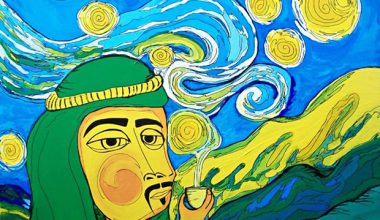
Karimah Hassan is a multidisciplinary artist with a diverse heritage rooted in Wales, Yemen, and Bangladesh. With a practice grounded in localized community-driven storytelling, she explores themes of diaspora, belonging, and cultural diversity. Blending spirituality and consciousness, and drawing upon her Islamic faith for inspiration, Karimah’s work spans large-scale painting, poetry, and the hosting of ‘community showcase teasers’ through the explorative forms of ‘exhibiting’.

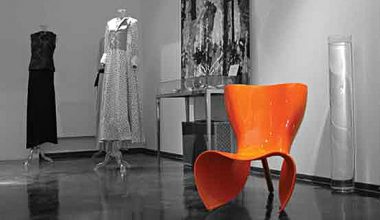
A graduate with an MA in Architecture from the Royal College of Art, Karimah’s innovative approach is reflected in her collaborations with prestigious institutions such as The Barbican and luxury brands like Burberry. Her work has previously shown across London, New York, Toronto, and the Middle East, and she is back in Beirut for an artist residency with Secteur Privé.
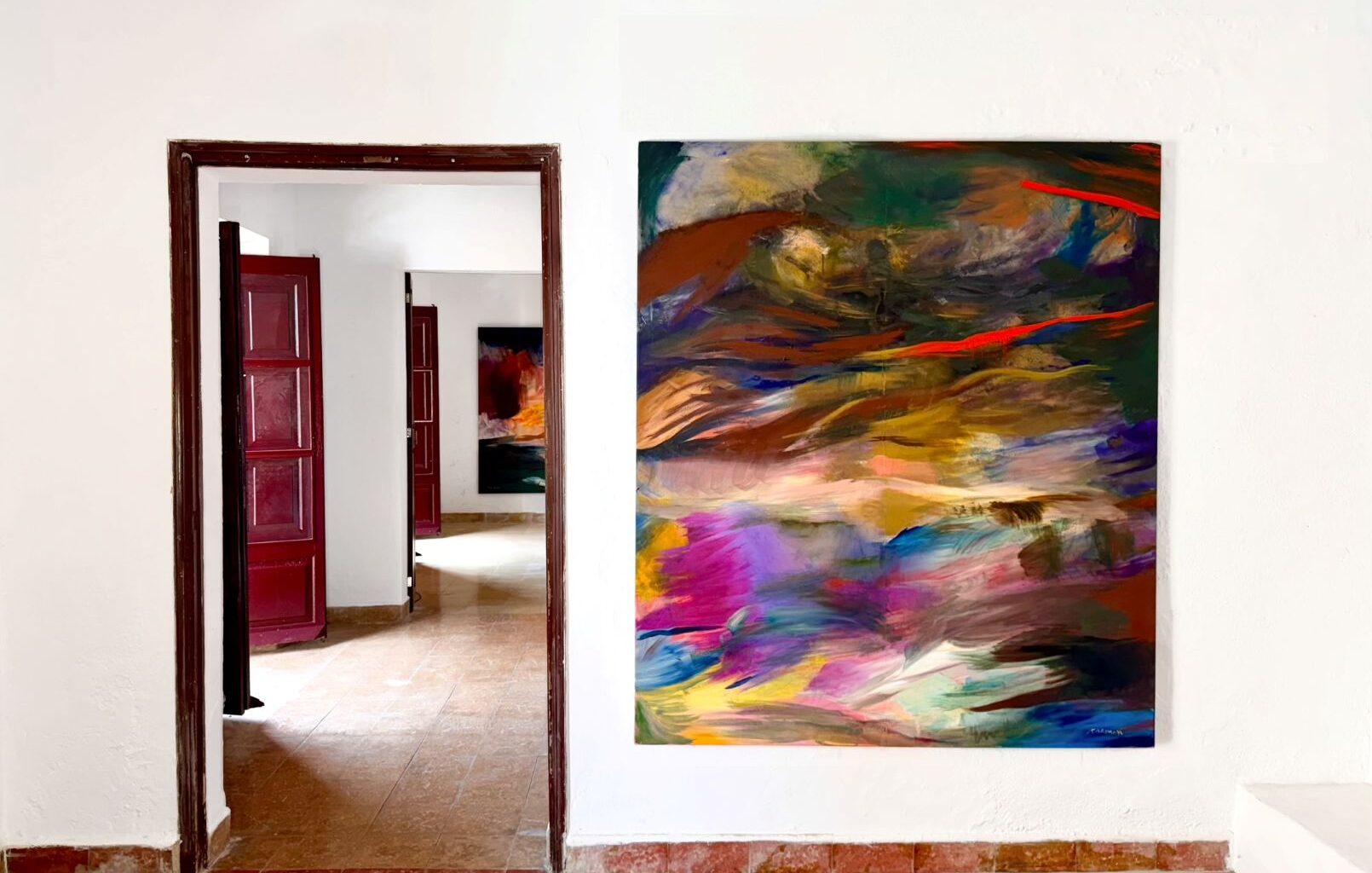
During this summer-long research and painting immersion across the Lebanese capital and its surrounding mountains, Karimah will create a new series of paintings and sketches inspired by the spirit of the Levant, its movement, memory, and joy. Drawing from field notes, filmed moments, and local encounters, the project will explore what it means to make beauty in defiant places. The work will serve as the groundwork for a larger-scale collection to be presented in London at Frieze 2025.
We sat down with Karimah to talk about her journey as a creative, and how she uses her work as a tool not only to break barriers but also bring the community together. She spoke about her residency and her future plans-not just to invest more time in the region, but also build a platform for artists.
Saira Malik (S.M.): Trained as an architect, your practice brings together structure with emotion while focusing on themes of diaspora, belonging, beauty, and visibility. Can you give us an insight into your journey as an artist and how your practice has evolved?
Karimah Hassan (K.H.): I trained in architecture at the Royal College of Art, but I left the field when I realized what I was trying to build couldn’t be contained in steel or concrete. What I really wanted was to construct emotional space and allowance for personal transformation; to make something that held memory, contradiction, and movement. So, I pivoted to painting. I began on the streets, painting murals and documenting stories in real time. That direct relationship with the public shaped everything. It taught me to work fast, listen deeply, and show up consistently.
My practice evolved from that urgency. Over the years, I’ve exhibited internationally; from London to New York, Toronto, and the Middle East, and collaborated with global brands to bring storytelling into commercial spaces. Today, I move between the studio, stage, and screen. Whilst my paintings are now collected by editors, institutions, and patrons, the work is still rooted in the same impulse: to tell stories that matter, and to make beauty public.

(S.M.): How does your perspective as a Middle Eastern woman guide the way you blend visual art and literature into your work?
(K.H.): I grew up in South Wales with Yemeni ancestry; a mix that didn’t always fit the mainstream image of Britishness. So, I made space for it through painting and poetry. I see visual art and language as two dialects of the same prayer. My series I’m working on now in London, uses spoken word and color to honour my family lineage, from Cardiff’s Tiger Bay to Sana’a. It’s a love letter to cultural contradiction, and it’s important for me to show that there are contradictions within how someone may assume I show up – it humanizes what could otherwise be a label. I love the Sufi poets and I love hip hop, dance, rebellious writing and activist philosophy. I love the grace, sensuality, and seduction of the Middle East, and I love the chaos and intuition of womanhood. In my Beirut series, I will pair gestural paintings with poems and film to honor movement and the complexity of experience and expression. I don’t separate forms, I let them expand each other.
(S.M.): What are some of the biggest challenges you have faced as a female artist, and how did you find ways to overcome them?
(K.H.): The world doesn’t always believe you until you’ve already proved it. I learned to believe in myself before anyone else did. I made my own shows, built an audience from scratch, painted on walls when galleries said no. The challenge is often being seen through someone else’s idea of who you should be. I’ve had to carve space. Sometimes with grace. Sometimes with grit. I overcame them through showing up, time and time again, going to people whether online or in person, an interview, a friend and being curious to ask "How can this help get me to where I need to go?”. Eventually, I started finding supportive people who knew the journey and offered assistance, opportunity, and grace.
(S.M.): You share your work through ‘community showcase teasers’. How does this way of exhibiting help you create meaningful connections and build a community?
(K.H.): Art becomes more alive when people witness its becoming. I know, from first-hand experience, that not everyone feels welcome in white cube spaces. People don’t just want to see the art, they want to understand how it’s made and why it matters. I build community through process. Whether I’m filming plein air sessions whilst travelling, or sharing studio vlogs and poem casts on Substack, I like to let people in early. That trust builds long-term engagement, especially online. Collectors, curators, and collaborators have often come through a digital presence first. It also keeps me accountable to the people who believe in my work.

(S.M.): Your work has previously shown across London, New York, Toronto, and the Middle East, and now you are back in Beirut for an artist residency – what drew you to join this program and connect with the region?
(K.H.): I exhibited in Beirut last year for my SOLEIL! solo show, and the response was overwhelming. I knew I had to return and build on that connection. This residency with Secteur Privé offered the chance to create more slowly and intentionally. I’m working on a new series that captures the joy, memory, and movement I’ve witnessed here. It’s also laying the foundation for a solo exhibition in 2026. From the moment I arrived, I felt something powerful, in the way people welcomed me, in the rhythm of the streets, and in the architecture layered with memory and meaning. I’m drawn to the region’s vibrancy: its music, literature, and the delicate intersections of faith, identity, loss, and beauty. There’s something deeply inspiring about creating in a place that holds so much history, and where, in the face of political or emotional unrest, people still choose aliveness, gratitude, and creation.
(S.M.): What does this program entail and what do you hope to discover and develop – both in terms of your artistic practice and in your personal growth?
(K.H.): It’s a two-week intensive across Beirut and the surrounding mountains. I’ll be painting outdoors, recording film, writing poetry, and connecting with local communities. This is R&D for a larger collection premiering in London and/or Lebanon next year. Creatively, it’s allowing me to refine a new visual language: faster brushwork, stronger gestures, more restraint in color and to lean on new symbology that is closer to my Arab heritage. Personally, I’m learning how to pace long-form projects while keeping momentum. It’s the balance between residency as a retreat and as a production lab. For me, the residency is a living sketchbook. I’m creating a series – paintings inspired by movement, memory, and the way Lebanon insists on life. And yes, whilst I’ve been painting plein air, filming on balconies, writing in notebooks that smell like dust and jasmine, more than what I’m making, it’s about how I’m listening. I came here to remember something I didn’t know I’d forgotten; that joy can be a form of resistance. That color can be a form of prayer.
(S.M.): Being in Lebanon for this residency, how has your connection to your diasporic roots influenced the work that you are creating?
(K.H.): It’s brought my personal archive into sharper focus. I’ve been referencing family photos; my great grandfather in Yemen, my grandmother in 1960s Cardiff, and connecting those memories with what I’m experiencing here. Diaspora isn’t abstract in Beirut. It’s present in the food, the architecture, the conversations. It has given me language and visuals to make work that feels emotionally exact. This series (residency) is a chance to see what comes up, maybe document the movement, but also being open about where the body carries memory and what adventures unfold.
(S.M.): You have talked about feeling ‘raw, generous joy that is deeply spiritual’ in Beirut. How do you hope to capture this energy and spirit in your work?
(K.H.): I’m not sure yet, I am excited to see what happens. I have a feeling it may come across simply in the generosity of people inviting me to their homes, villages, or nature, and then being inspired by their stories and the landscapes. I think the stories and composition will come across more as a dream-like narrative. The joy I’m talking about isn’t surface level. It’s a joy with roots. It’s the kind that knows loss and still chooses colour, and so I want the feeling to feel deep, heady, a little frantic at times – and full of layers. Layers will be important to capture the contradictions in stories, mindsets, and beliefs.

(S.M.): How have your experiences in Lebanon, including plein air painting and local encounters shaped the way you are exploring the country’s beauty and resilience through your work?
(K.H.): Painting outdoors here forced me to respond in real time. I didn’t overthink – I painted quickly, honestly. A sketch on a rooftop, a woman’s silhouette in the light, the palette of the city at sunset, it all became source material. Local conversations often shifted my perspective mid-painting. It’s changed how I see the role of place in my work. On the one hand I’m a fly on the wall documenting, and on the other I’m collaborating with what’s happening around me, maybe even reminding people to look up and around and be present.
(S.M.): In what ways do you hope your work from this residency will resonate and impact viewers when it is showcased in London later this year?
(K.H.): I hope it interrupts people’s assumptions. That when they see this series in London, they realize Middle Eastern stories don’t always have to bleed. They can laugh. They can shimmer. I want the show to feel like a party and a prayer, where viewers feel both uplifted and undone. This work carries the heartbeat of Beirut. And I want London to hear it.
(S.M.): As this residency deepens your ties with the Middle East, what are your future aspirations for work in the region?
(K.H.): This is just the beginning. I’m building long-term relationships in the region with galleries, cultural spaces, and artist-led initiatives. I want to show in places like Jeddah, Doha, and Dubai, and explore cross regional residencies between North Africa, the Gulf, and the UK. I’m not here to extract. I’m here to invest. I want to keep showing up, again and again, until the work and the region become indistinguishable from each other. Eventually, I’d like to launch a fellowship or platform for artists from diaspora communities to build globally without erasure. It’s about infrastructure.

(S.M.): Based on your own experience, what advice can you give to anyone considering a full-time career in the art world?
(K.H.): Treat it like a job before it pays like one. Build your own systems. Document everything. Share your work online with intention. Rejection is part of the process, don’t take it personally. The art world is slow, but your momentum doesn’t have to be. Focus on output, not approval. That’s what shifted things for me. I was consistent.
(S.M.): Finally, what is that one life lesson you learnt in the early years of your creative journey that still guides you today?
(K.H.): The lesson is this: your consistency is sacred. When everything else is uncertain, the act of showing up to the work becomes its own kind of faith. I paint not because I’m always inspired, I paint because I promised myself I would. And that promise has carried me through heartbreak, reinvention, loss, gratitude, and joy.
www.instagram.com/karimah.hassan
Images courtesy of Karimah Hassan