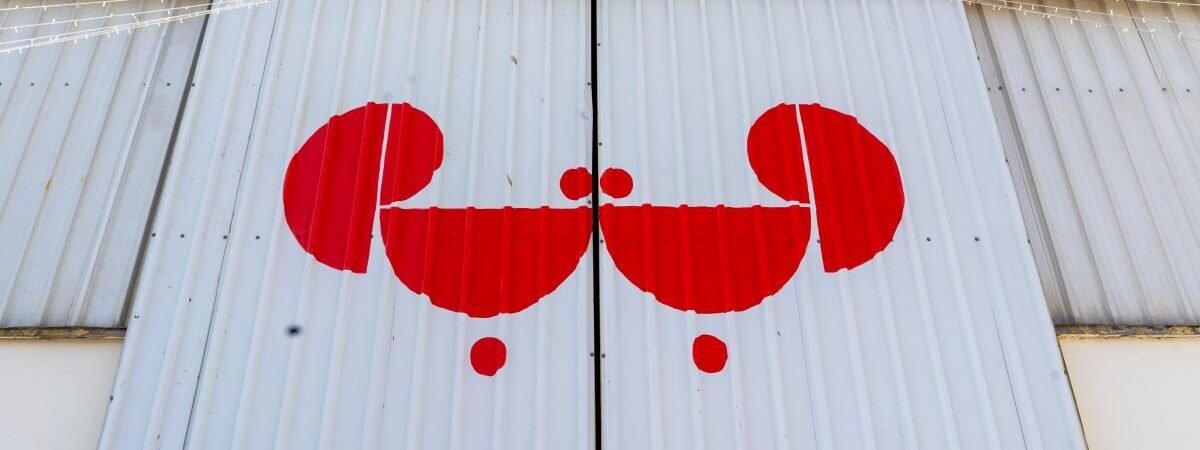
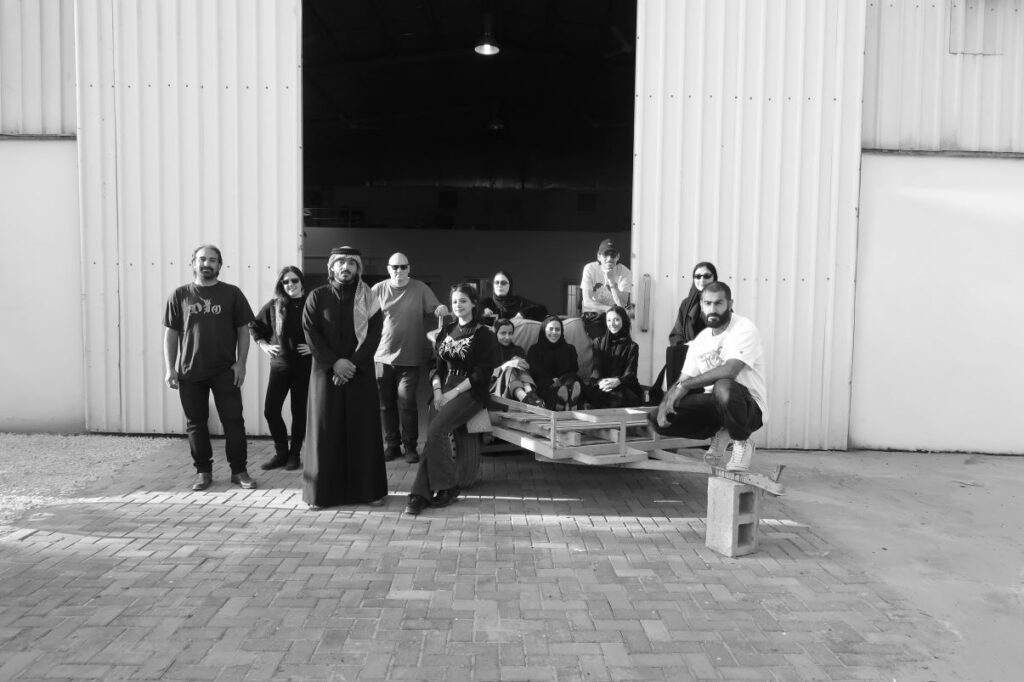
In the heart of Doha’s Industrial Area, Sanaiyya, a new kind of creative energy is taking root among the workshops and warehouses. Street 15, once defined solely by small-scale industry, is now home to GubGub Studios, an independent, artist-run space born from a decade of dialogue and a steadfast belief in art as a tool to imagine and build futures.
Founded by a group of thirteen diverse practitioners, GubGub Studios is more than just a workspace; it is a horizontal cooperative built on the principles of equity and interdependency. By reclaiming a landscape often overlooked by the traditional art world, the studio bridges the gap between high-concept art and the grit of local fabrication, turning discarded materials and industrial processes into a melting pot of discipline and discovery.In this interview, we speak with co-founder Sebastián Betancur-Montoya—an artist, educator, and curator—about the spark that led them to the Industrial Area, the challenges of fostering a grassroots culture of dialogue, and why GubGub Studios is meant to serve as a blueprint for the next generation of creative ventures in Qatar.
Khaleejesque Magazine (K.M.): The choice of Doha’s Industrial Area as a home for GubGub Studios mirrors a global movement of artists reclaiming urban fringes. What was the "spark" that led the collective to see the creative potential in this specific landscape, and how does the grit of the area inform the work being produced?
Sebastián Betancur-Montoya (S.B.): To clarify, we don’t see ourselves as a collective, yet we are very much invested in Collectivity.
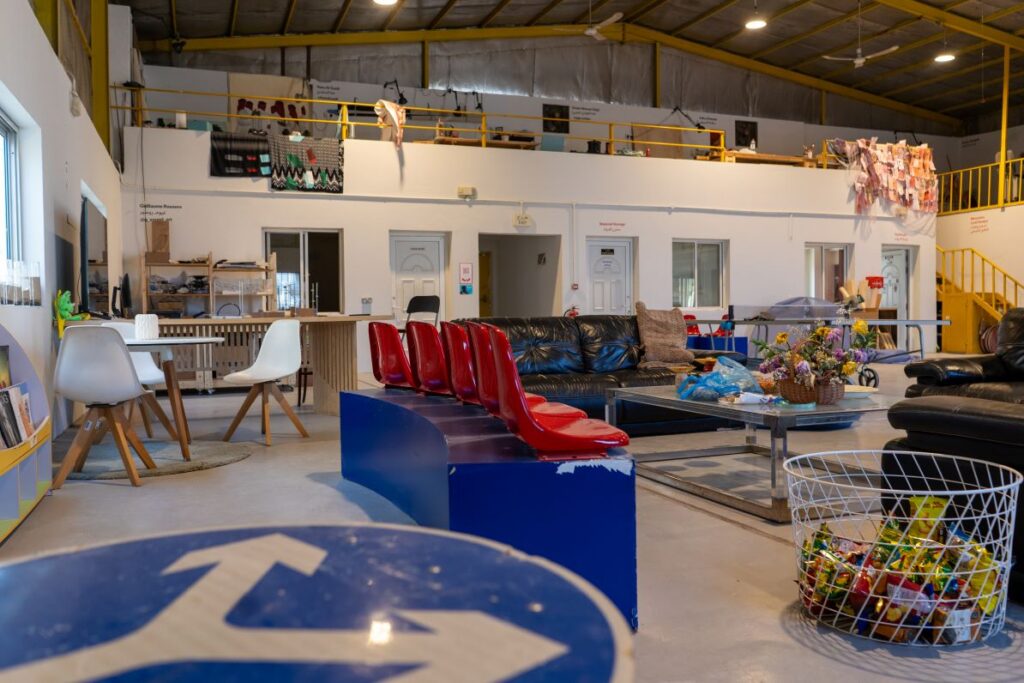
Getting into your question, more than a spark, it was a combination of persistence and chance. Some of the conversations that led to GubGub Studios go back 10 years, in the midst of the momentum created by the first cohort of the Fire Station residence; these conversations ramified and oftentimes circled back, this reaffirmed us the need for long-term studio spaces. It’s been an interesting learning curve. For the last few years, some of the current members looked into old villas, commercial storefronts, and abandoned buildings, while also writing grant applications, drafting business plans, learning about the commercial normative in Qatar, and fantasizing about figuring out a viable art space model for our context. Last year, we learned of available large spaces around Street 15 in Sanaiyya [Doha’s Industrial Area], where we are settled, due to small and medium industries moving to newly developed free zones, the real estate prices became viable. We then jumped into phone calls, invited others, grabbed a coffee, and came up with a plan. The news about Art Basel coming to town felt reaffirming and gave us a timeline to work towards.
(K.M.): How does being "artist-run" and independent allow GubGub to foster a "culture of dialogue" that differs from more institutionalized or state-led art programs in Qatar?
(S.B.): Rather than independence, we are interested in interdependency. Collaboration, collectivity, and crosspollination are at the core of our ethos; we are keen on growing together alongside other institutions and initiatives. In this same line of thought, we don’t see GubGub Studios existing outside the institutionality; we instead consider ourselves as another building block in the larger Arts and Culture infrastructure of the country and the region.
Though, we do operate under a cooperative model where rights, roles, and responsibilities stem from a place of equity and personal interest, this generates a sense of horizontality, agency, and ownership that is foreign to more hierarchical models. Also, our main objective being sustained long-term studio practice adds the planning dimension, both for our individual practices as well as for a collective vision of GubGub Studios as a community space; this requires us all to actively ask/offer advice, ideate programs, funding strategies, partnerships, space enhancements, etc. these are pitched, discussed, voted, and refined through systematic argumentation and reasonable compromise, but also and most importantly, trust.
GubGub Studios is the result of synergies, dialogue, trial and error, longing for community, and a steadfast belief in art as a tool to imagine and build futures that are our own.
(K.M.): One of your stated goals is connecting artists with the network of local fabricators and material suppliers in the Industrial Area. Can you share a specific instance where a "street-level" discovery or collaboration with a local workshop fundamentally changed an artist’s practice?
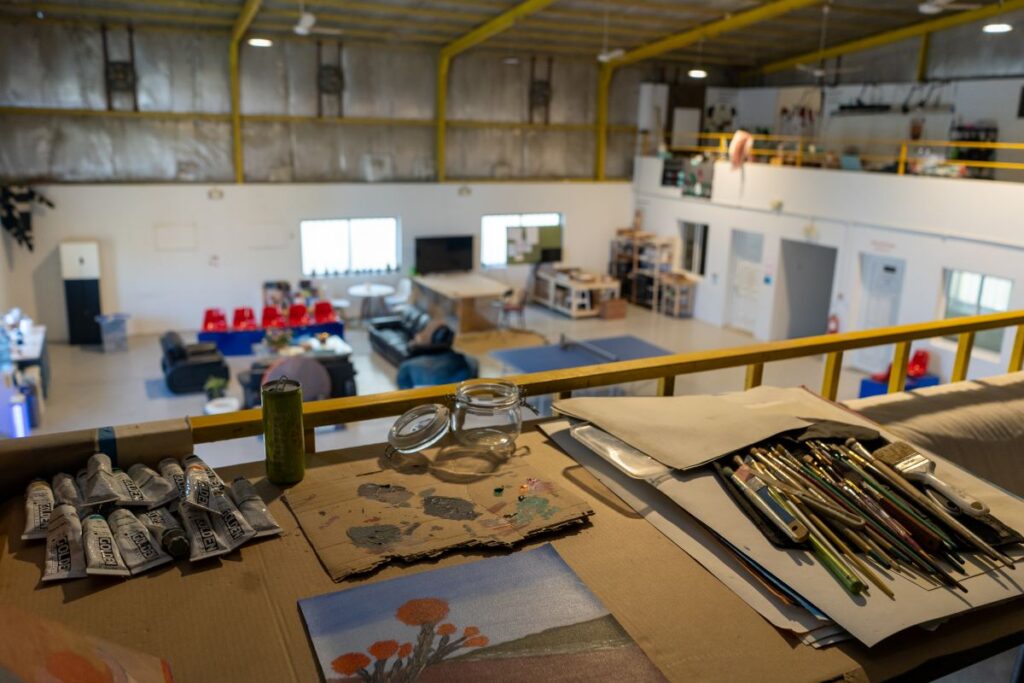
(S.B.): We have been up and running for roughly 2 months; it’s too early to speak about fundamental changes yet. But the generous physical space and the availability of all sorts of industrial processes and materials a stone-throw away, allow us to work on larger scales, experiment with unfamiliar mediums, and develop complex projects, such as Gigi painting on a 10 meter canvas, Ayaz experimenting with tire inner tubes or Hana’s piles of discarded mannequins, Salha’s draping drawings from the railing, or pitching a dozen of camping tents as indoor galleries, as we did for our launch exhibition. Though, what has really made a mark in our approach to artmaking is the organic conversation and interactions derived from the diversity of practices, knowledge, and lived experiences coming together under a shared space; I am not only referring to the 13 GubGub founders, it’s also the contractors who come to do work and become regular tea and coffee companion and occasional material advisors, the curious friends showing up to take photos and play music, the neighbors who lend us scaffolding and gift us second hand furniture, the nuts vendor, the generous patrons, scholars and art community, the guys at the nearby baqalat [grocery stores] and food stalls for whom we are no longer strangers, even the visiting stray cats and dogs that have become a tad too comfortable with art.
All these unexpected dynamics have, in a very short time, led most of us to find in GubGub a place and a group that feels safe and even allows for vulnerability. And I see that as potentially a more powerful discovery that affords artists the possibility to take risks and explore new bodies of work.
(K.M.): With artists ranging from diverse backgrounds,, the studio is a melting pot of disciplines. How do you manage the "peer exchange" process—does the proximity of such diverse practices lead to intentional collaborations or more organic, "happy accidents"?
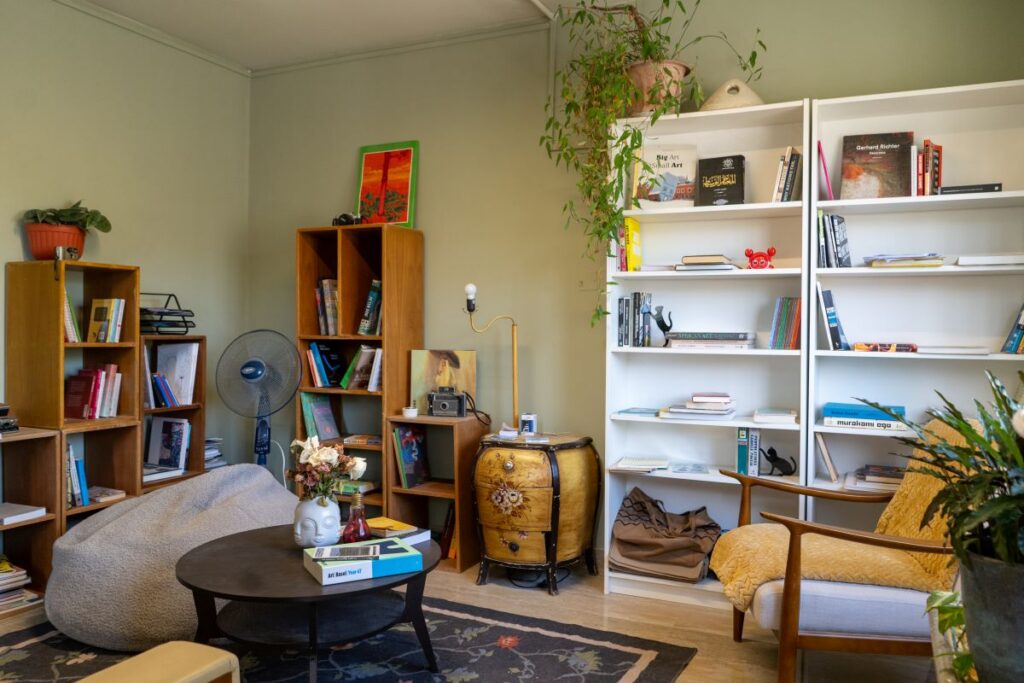
(S.B.): It’s really enriching from the perspective of the art practices and an invaluable resource for the myriad efforts required to start such a project from the ground up, including developing the website, renovating a bathroom, or pursuing legal registration, particularly with no previous local reference to follow.
It’s been a steep learning curve, and we are still climbing it. There have been frictions when it comes to “peer exchange”, and we expected it; the differing styles of communication, diverse sensibilities, worldviews and traveled paths, long working sessions, and the overstimulation of sharing a space [for many a first], summed to the deeply personal endeavor of art-making, unavoidably lead to challenging moments and difficult conversations, but also to build upon the lessons learned. We are appointing a board of advisors and have invited a group of mentors [established curators, artists, and academics], we intend to have in them a sounding board for high stakes decision making, conflict resolution, and individual artistic guidance; this leaves the studio critiques out of the intimacy of daily interaction; unless invited, which we continue to engage on.
At times organically, others intendedly, and some others out of sheer need, several collaborations have emerged since the very inception of the project:
A Blueprint: From the onset we became aware of the lack of a precedent framework to set up grassroots creative ventures in Qatar, and possibly in the neighboring Gulf States; we crafted our own bringing together a couple members’ experience with this type of projects in other contexts, others’ understanding of the local legal structures, and some practical skills dealing with contractors and building renovations. The interest of many in the local creative community made us aware of the relevance of our experiment and the need to replicate it, since we have been connecting with groups of fellow artists, musicians, and designers to share our model and assets as a blueprint to support them in shaping the right model to structure and develop their projects.
A to Z: Amna Al Baker and Zainab al Shibani, two of the GubGub artists, collaborated for the opening launch, creating a joint installation in which A’s ethereal fiber and text structure embraced Z’s delicate kinetic sculptural illustrations. Despite a long-standing interest in each other’s work, this collaboration came about as a last-minute idea, yet a gesture of generosity and mutual appreciation.
Mo and Me: Anchored in the Studios’ collaborative ethos and interest in network building, the array of works shown during GubGub’s launch event was co-curated by Netherlands-based curator Mo Reda- an early supporter of the project and myself -a founding member. It was intense, fast-paced yet smooth and rewarding, with a plot twist… we had never met in person, nor spoken, let alone worked together before ! Much gratitude to Habeeb Abu Futtaim for orchestrating a collaboration across time zones.
GG13: Still in the works, this is a very exciting initiative we are launching next April. It consists of quarterly limited editions of original artworks produced at GubGub, every edition will contain works from 3 of the founding artists and a run of only 13 sets will be available per issue. This is both a funding mechanism to allow us to continue investing in the project and our planned programs, but also as an experiment to make art affordable and encourage people to acquire art and hopefully kickstart new collecting practices.
(K.M.): As Doha continues to transform and businesses move outward, where do you see GubGub Studios in five years—is the goal to remain a grassroots venture, or to become a primary bridge between the local community and the international art world?
(S.B.): Hopefully in the same place! Ideally with more mature programs, a bigger impact in the community, and having fine-tuned a model for financial self- sustainability.
I don’t see the two mentioned paths being mutually exclusive. We are invested in maintaining our grassroots nature but equally interested in connecting and weaving networks across geographies, particularly in the region, as well as in the global majority contexts.
On another note, we foresee the area around GubGub Studios potentially evolving into a creative hub. Going back to the first question, the small and medium industries leaving this part of Sanaiyya [Industrial Area] is creating an occupancy void, which could trigger a land use change; after our project’s launch, many collectives and groups of creative practitioners have approached us expressing interest in following a similar model. From a place of belief in collectivity, we are actively supporting them towards developing their projects and are excited to welcome more like-minded neighbors.
For more information, visit: https://gubgubstudios.art/