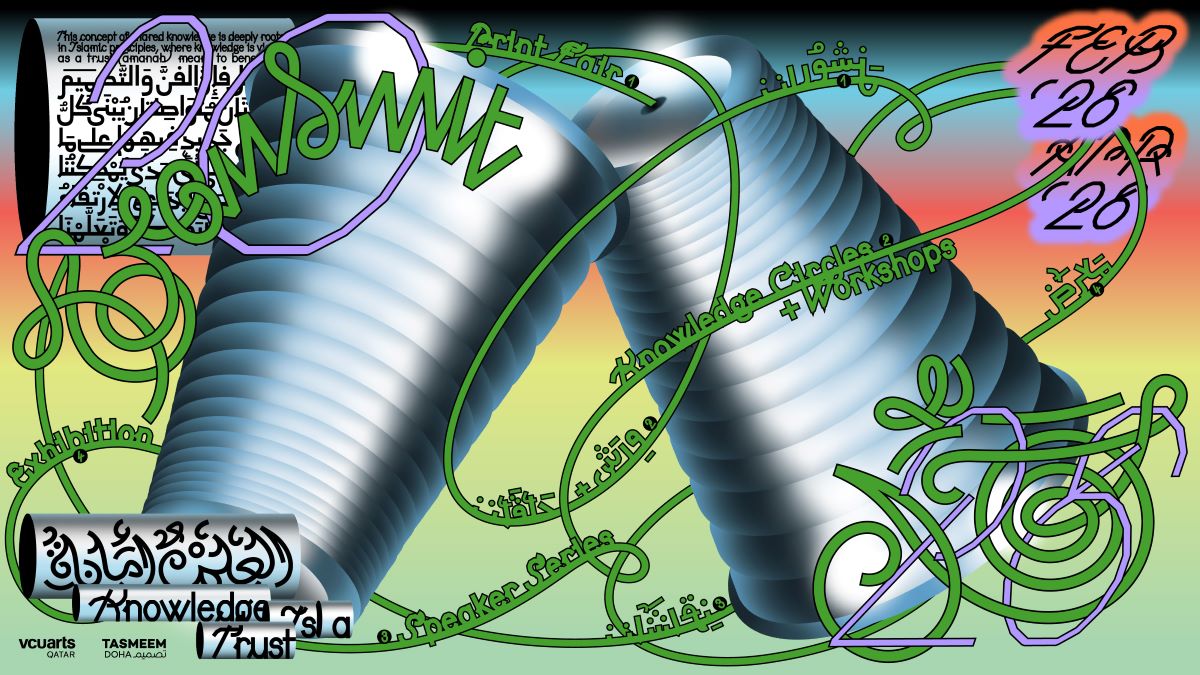
What happens when the worlds of architecture, anthropology, and digital media collide? For the curators of VCUarts Qatar’s Tasmeem Doha 2026, the result is a "spark" of recognition and collective responsibility. Curators Hind Al Saad, Reham Mohamed, and Sara Al-Afifi are steering the next biennial toward a model of "transmission," where knowledge is not just showcased but actively circulated. By treating documentation as a design practice and involving emerging artists in a generational exchange, they are ensuring that the discourse of Tasmeem Doha lives far beyond the event itself. We sat down with the curators to discuss their vision for an interconnected, accessible, and deeply rooted creative ecosystem in Doha.
Khaleejesque (K.M.): Tasmeem Doha has been a cornerstone of the region’s creative landscape since 2004. As you reflect on over two decades of discourse, how has the biennial’s mission evolved from simply showcasing design to actively shaping the cultural narrative of Qatar and the wider Khaleej?
Hind Al Saad (H.A.), Reham Mohamed (R.M.), Sara Al-Afifi (S.A.): This edition draws on the Islamic principle of knowledge as a trust (amānah) meant to benefit all, reframing knowledge gained within creative practices as a shared responsibility rather than individual expression.
We shaped the curation of Tasmeem to echo the polymaths of the Islamic world. Where the range of practices cover translation, design, architecture, anthropology, archiving, and more. By bringing together regional and international voices, we aim to create dialogue that is rooted in lived histories, contemporary inquiries, and collective responsibility.
(K.M.): The 2026 theme, حَوِّل Transmit, explores the transfer of knowledge as an amanah (trust). In an era of digital paywalls and gated information, how does this edition challenge the creative community to return to a more communal, 'open-source' way of making and thinking?
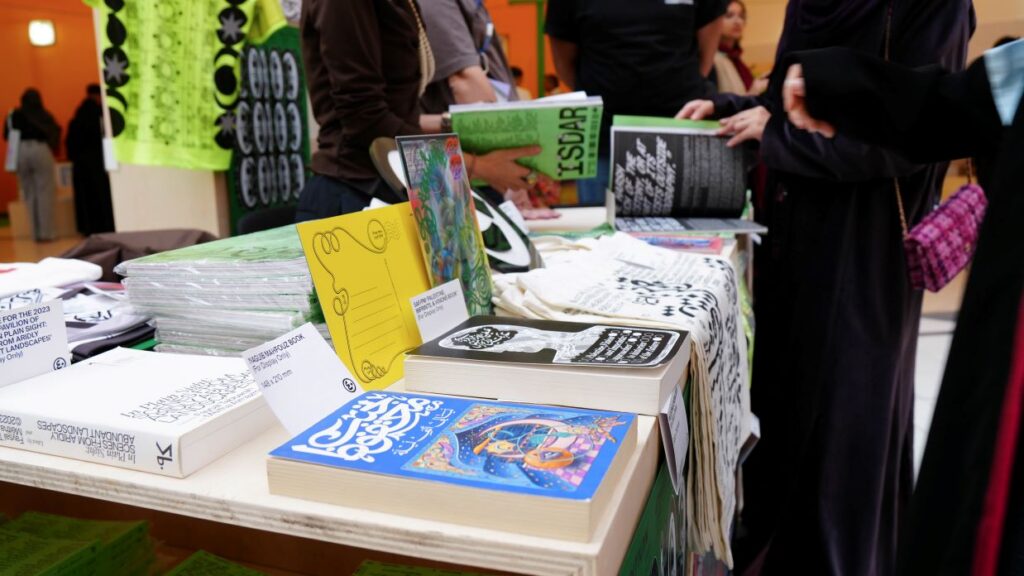
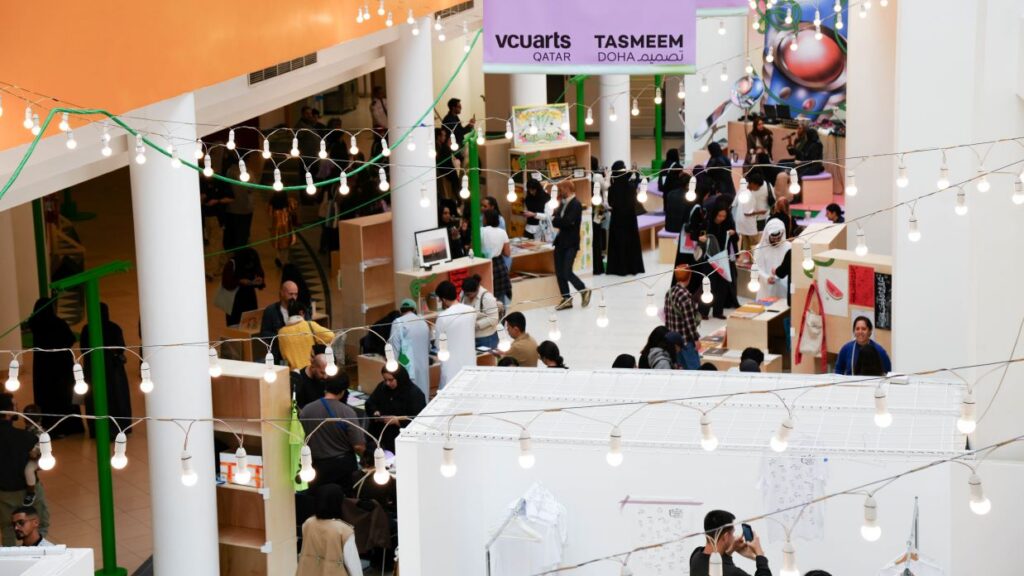
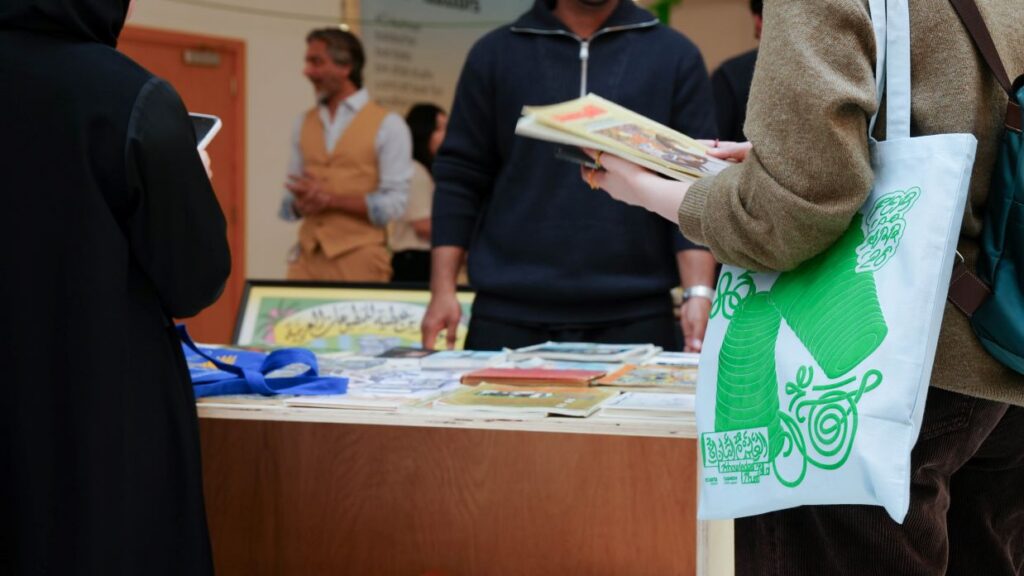
(H.A./R.M./S.A.): We reshaped the format of Tasmeem to reflect the ethos of knowledge sharing. The program unfolds across three distinct periods, beginning with a Print Fair, an addition not previously part of Tasmeem. Printed matter and publishing embody the core of the curatorial framework, as they are accessible and tangible mediums for knowledge exchange. By inviting independent studios and publishers from different countries around the world to participate, we emphasized the accessibility and circulation of ideas through print.
In addition to bringing together contributions from speakers, workshop leaders, and the wider community through an open call, compiling them into a freely distributed newsprint publication. In this way, Transmit models openness in practice, reinforcing knowledge as something collectively produced, circulated, and sustained.
(K.M.): One of the hallmarks of Tasmeem is its rejection of silos, bringing together everyone from architects to kinetic imaging artists. How do you curate a space where such diverse disciplines can find a common language, and what is the 'spark' you hope happens when these worlds collide?
(H.A./R.M./S.A.): The diversity of disciplines adds depth to the curation of the lineup. Rather than grouping participants by medium or technique, we connect them through a shared conceptual framework; linking their practices through ethos, motivations, and the questions they engage with. When different perspectives are encountered within the same space, new interpretations naturally emerge. This creates moments where audiences can engage with a concept through multiple approaches and mediums. It also offers invited speakers and workshop leaders a forum for dialogue that can expand their own ways of thinking, as knowledge is exchanged across fields.
The “spark” we hope for is recognition and resonance: when someone sees their inquiries reflected in another discipline, and inspires participants to circulate what they know with greater generosity and responsibility.
(K.M.): Past editions have explored themes like 3ajeeb! and Hekayat, often blending the whimsical with the critical. With Transmit, there seems to be a focus on the role of archives and libraries. How can design act as a tool to 're-establish the chain of knowledge' for a generation that is looking to both the past and the future?
(H.A./R.M./S.A.): Design can function as a mediator between generations. By engaging with archives, translation, and publishing, creatives can make knowledge accessible. Re-establishing the chain of knowledge is ultimately about continuity, ensuring that what has been produced is preserved, and remains in circulation.
For Transmit, this means treating documentation itself as a form of design practice. The talks, workshops, discussions, and their outcomes are shared resources. By committing to public accessibility through publications, and online archives, knowledge is allowed to circulate beyond the event itself.
Equally important is who carries that knowledge forward. By actively involving emerging artists and designers, transmission becomes a generational exchange rather than a top-down model. Contemporary formats such as podcasts, memes, short-form video, and digital publishing allow ideas to travel across platforms and communities, ensuring that knowledge remains shared with all.
(K.M.): Tasmeem Doha isn't just an international conference; it’s deeply rooted in the VCUarts Qatar community. How does the involvement of alumni—like the current curatorial trio—strengthen the bond between academic research and the tangible growth of Doha’s creative industries?
(H.A./R.M./S.A.): Being alumni directly shapes the way we curate and program the event. We do not approach Tasmeem as external programmers, but as members of the community who emerged from it and experienced it first as students and participants. That perspective allows us to understand both its academic foundations and its broader cultural impact.
When alumni curate, the biennial becomes a feedback loop. Knowledge moves between pedagogy and practice, between research and public culture, and between emerging voices and established infrastructures. That circulation, between learning and making, is at the heart of what Transmit seeks to embody.
(K.M.): Following the 2024 theme Under Construction, which investigated the criticality of change, how does Transmit act as the next logical step in that journey? Is the goal now to take those 'new solutions' and ensure they are successfully relayed to the next generation of Arab creatives?
(H.A./R.M./S.A.): VCUarts Qatar’s Tasmeem Doha 2026 is not about finding or presenting solutions. Instead, it frames knowledge as a trust, meant to benefit all, and brings that ethical responsibility to the forefront of conversations within art and design spaces. The aim is to create the conditions for collective knowledge sharing rather than to offer definitive answers.Transmit asks how ideas endure and circulate. It considers how emerging designers and artists inherit, reinterpret, and expand what came before them, and how we can build systems that keep that transfer of knowledge open and collective.
Tasmeem Doha was established in 2004 as VCUarts Qatar’s signature art and design
biennial. For full details on the print fair, workshops and speaker series, and information on how to participate, visit tasmeemdoha.com.